How Science, Technology, Engineering and Mathematics Are Building the Future
The future is no longer something we simply imagine—it is something we are building right now.
From artificial intelligence and robots to space exploration, medical breakthroughs, clean energy, and smart cities, STEM is transforming the way we live, work, learn and communicate.
STEM stands for Science, Technology, Engineering and Mathematics. Together, these fields provide the knowledge and tools needed to solve some of the world’s biggest challenges.
And the STEM revolution is just getting started.
🤖 AI Is Changing the Way We Live
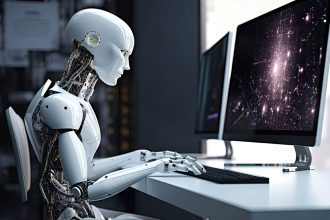
Artificial intelligence has moved from science fiction into everyday life.
AI can help doctors analyze medical images, help scientists study climate change, assist engineers in designing machines and help students learn new subjects.
We are also seeing AI-powered tools in smartphones, automobiles, video games, businesses and homes.
The important question is no longer whether AI will change the world.
It is how we will use AI to make the world better.
🦾 Robots Are Becoming Our Partners
Robotics is another major part of the STEM revolution.
Today’s robots can explore the ocean, assist surgeons, manufacture products, work in dangerous environments and explore places humans cannot easily reach.
Scientists are developing increasingly sophisticated humanoid robots, autonomous vehicles, drones and underwater robots.
Tomorrow’s robots may work alongside humans in hospitals, schools, factories, laboratories and even on other planets.
🚀 The Next STEM Frontier: Space
Humanity is also preparing for a new era of space exploration.
Scientists and engineers are developing technologies that could allow humans to spend longer periods on the Moon and eventually travel to Mars.
Space technology is producing innovations in communications, navigation, robotics, materials science and environmental monitoring.
For today’s students, this means that careers in space may extend far beyond becoming an astronaut.
Future space professionals could be engineers, computer scientists, biologists, roboticists, medical specialists, architects and data scientists.
🌊 STEM Is Helping Save Our Planet
STEM isn’t only about futuristic technology.
It is also about protecting the planet we already have.
Scientists and engineers are developing:
- Solar and wind energy
- Electric vehicles
- Advanced batteries
- Clean-water technologies
- Ocean-monitoring systems
- Climate models
- Sustainable buildings
- Agricultural technology
- Wildlife conservation tools
Technology can help us understand environmental problems—but people with STEM skills must turn that knowledge into solutions.
🧬 The Future of Medicine
Imagine a world where doctors can detect diseases earlier, treatments can be personalized for individual patients and advanced robots can assist with complex medical procedures.
That future is already beginning to emerge.
Biomedical engineers, genetic researchers, computer scientists and medical professionals are working together to develop new treatments and technologies.
The combination of biology and technology is creating exciting fields such as biotechnology, biomedical engineering and health informatics.
🎮 STEM Is Also Creative
Some people think STEM is only about laboratories, equations and computers.
That’s not true.
STEM requires creativity.
Video-game developers use mathematics, computer science, storytelling and graphic design.
Architects combine engineering with art.
Roboticists design machines that must interact with humans.
Engineers create products that must be useful, beautiful and affordable.
STEM is not just about knowing the answer. It’s about imagining what could be possible.
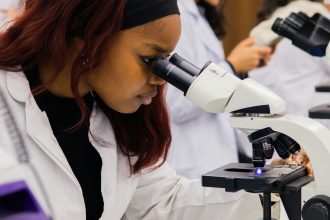
👩🏾🔬 The STEM Leaders of Tomorrow
Today’s students will become tomorrow’s scientists, engineers, inventors, entrepreneurs and technology leaders.
They don’t have to wait until adulthood to start innovating.
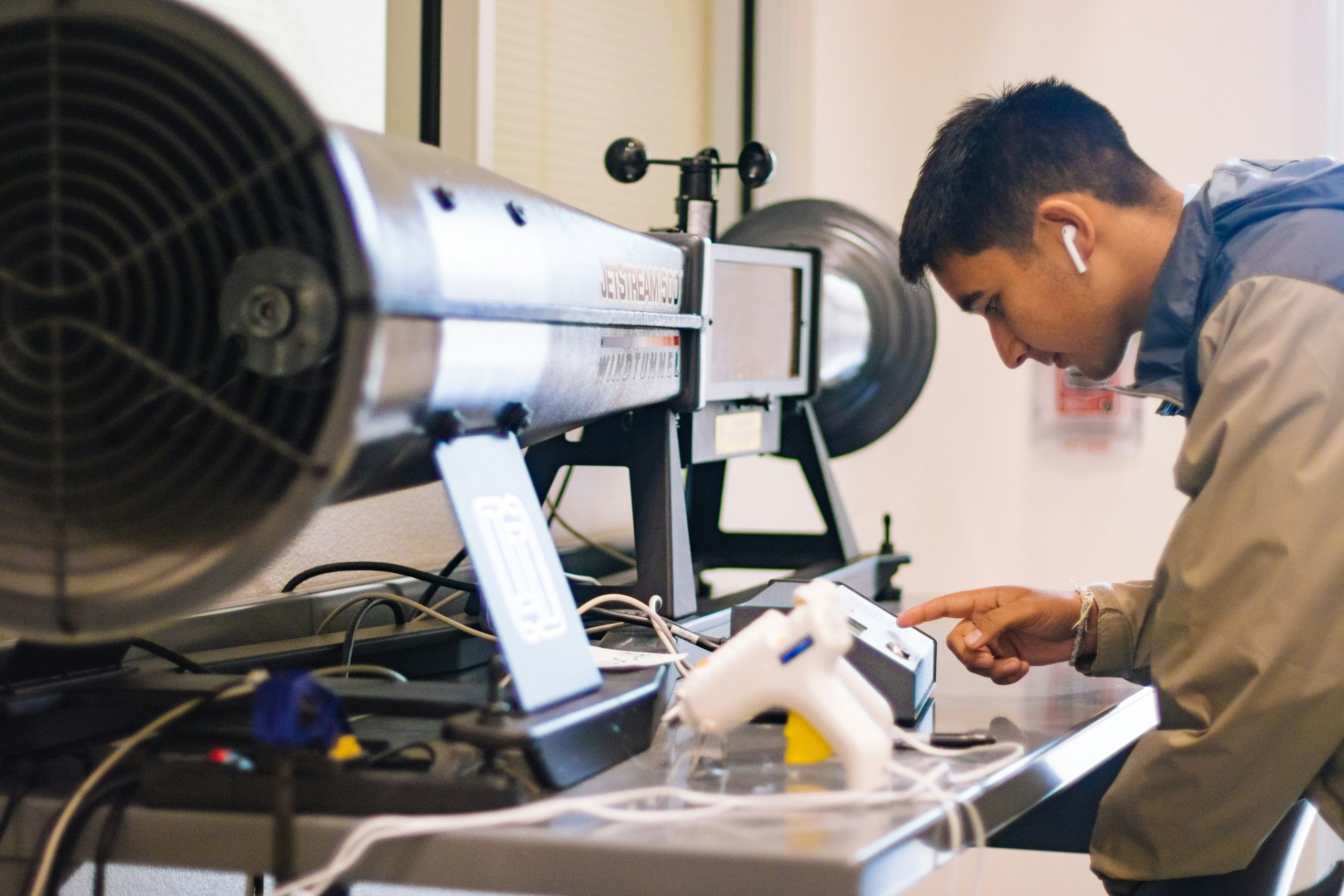
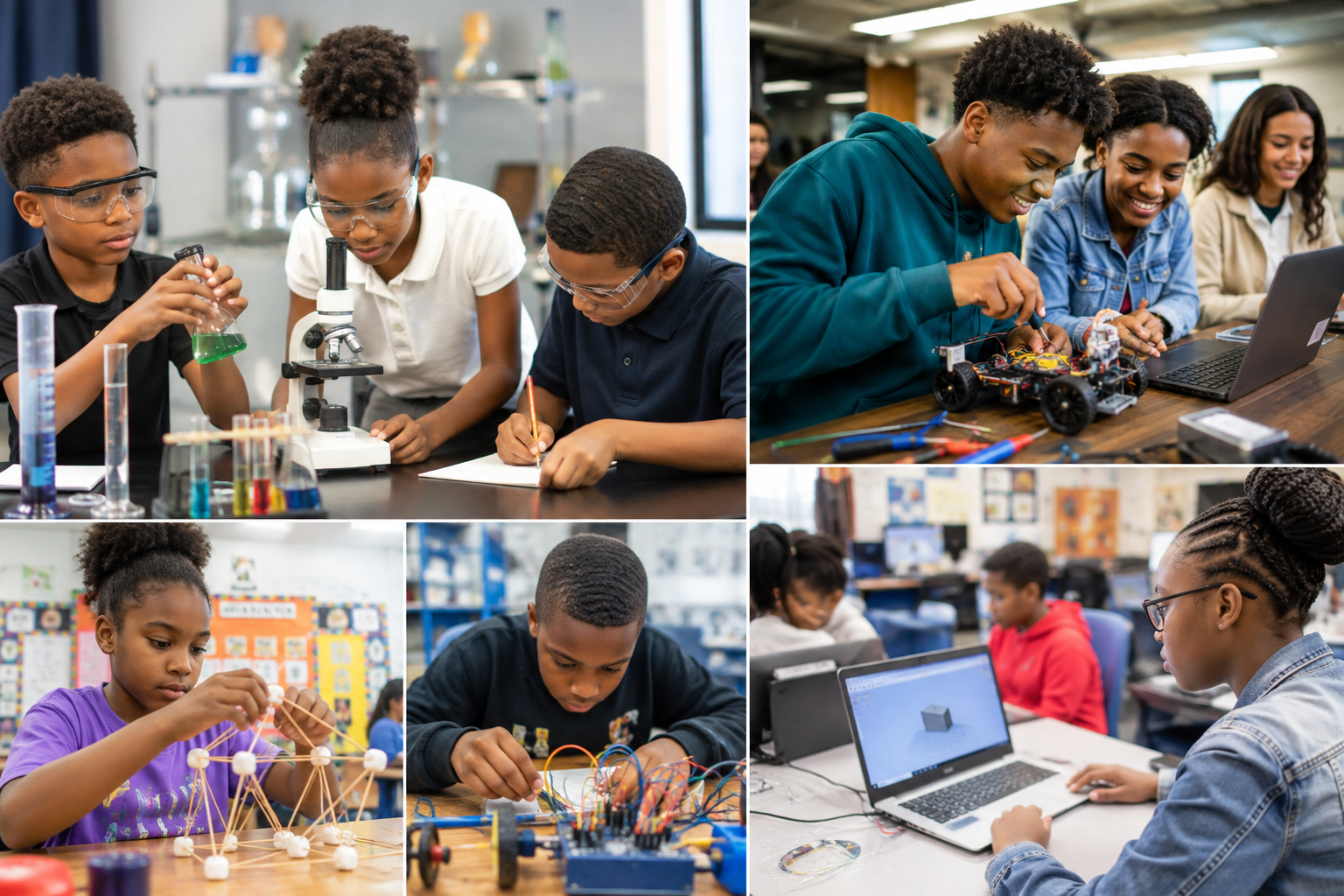
A student who builds a robot, programs a game, conducts an experiment, designs an app or creates a solution to a community problem is already participating in the STEM revolution.
The next great inventor could be sitting in a classroom right now.
🌟 STEM Challenge
What Would You Invent?
Imagine you have unlimited access to STEM technology.
What problem would you solve?
Would you:
🌊 Clean the oceans?
🤖 Build a helpful robot?
🚀 Design a Mars vehicle?
🧬 Create a new medical technology?
🌱 Develop clean energy?
💻 Build an AI assistant?
🏙️ Design the city of the future?
Write down your idea.
Then answer three questions:
1. What problem does your invention solve?
2. How would your invention work?
3. How could your invention make people’s lives better?
That’s how innovation begins—with an idea.
💡 STEM Fact
STEM careers are not limited to scientists and engineers.
The modern STEM workforce includes programmers, architects, healthcare professionals, environmental scientists, data analysts, cybersecurity specialists, game developers, robotics technicians, educators and entrepreneurs.
The Future Is Waiting
The STEM revolution is transforming our world—but technology alone cannot create the future.
People create the future.
The scientists who ask questions.
The engineers who build solutions.
The programmers who write the code.
The inventors who refuse to give up.
The students who dare to say:
“What if?”
The STEM revolution is here.
And the next chapter could be written by you