STEM Nastics Magazine | AI & Robotics | Engineering Zone
Artificial intelligence and robotics could create new possibilities for mobility, accessibility, and independence.
Engineering a More Accessible Future
Imagine a wheelchair that can use artificial intelligence and robotics to navigate its surroundings, recognize obstacles, and help its user move from one location to another. What once seemed like science fiction is becoming an exciting area of engineering research and innovation.
David Nyarko, an Applied AI & Robotics Software Engineer, works with a team that developed an autonomous wheelchair. Their project brings together software engineering, artificial intelligence, robotics, and problem-solving to explore new possibilities for assistive technology.
The project represents an important question for the future of STEM: How can engineers use emerging technologies to solve real-world problems and improve people’s lives?
When Artificial Intelligence Meets Robotics
Artificial intelligence allows computer systems to analyze information and make decisions based on their programming, models, and available data. Robotics combines software with physical machines that can sense and interact with the world around them.
When these technologies work together, they can support systems that interpret their surroundings, plan movements, and respond to changing conditions.
For an autonomous wheelchair, these capabilities may help with navigation, obstacle detection, and movement through designated environments. The precise capabilities depend on the team’s design, hardware, software, and testing.
Developing a system that transports a person presents challenges beyond simply making a robot move. Engineers must consider reliability, user control, accessibility, and safety throughout the development process.
Technology With a Human Purpose
The potential impact of autonomous mobility extends beyond engineering laboratories. Assistive technologies may help people with disabilities navigate everyday environments and access more opportunities for participation in education, employment, healthcare, and community life.
However, technology must be designed around the people who use it. Accessibility, comfort, affordability, privacy, and the ability to maintain control are important considerations when developing systems intended to support mobility.
Autonomous wheelchairs are not a replacement for every existing mobility solution. Instead, they represent one promising direction in the broader effort to develop more adaptable and accessible technologies.
Inside the Innovation: An Interview With David Nyarko
To learn more about the project, we are exploring David Nyarko’s journey into AI and robotics, the challenges his team encountered, and the potential impact of autonomous wheelchair technology.
In this interview, David shares insights into the engineering behind the project, the role of artificial intelligence in autonomous mobility, and the lessons that aspiring innovators can take from the experience.
The STEM NASTICS Q&A
SM—-What inspired you to become an AI and robotics engineer?
David: What inspired me was the opportunity to use AI and robotics to solve problems that have a direct impact on people’s lives. I became particularly interested in autonomous systems because they bring together software, artificial intelligence, hardware, and the physical world.
For me, the autonomous wheelchair is a perfect example of why I chose this field. We are not building technology just to demonstrate what AI can do. We are building technology that can help someone move through a complex environment with greater independence and dignity.
SM—–What problem were you and your team trying to solve when you developed the autonomous wheelchair?
David—–The problem we were trying to solve was mobility and independence for people with disabilities, particularly in large and complicated environments such as airports.
Airports can be difficult to navigate because they are large, crowded, and constantly changing. We wanted to build a wheelchair that could autonomously transport a passenger to their destination without requiring an attendant to manually operate it.
At Morgan State, we took a conventional powered wheelchair and transformed it into an autonomous mobility system by integrating the hardware, sensors, cameras, software, AI, and navigation technologies needed for autonomous operation.
SM—–How does the autonomous wheelchair use AI and robotics to navigate its environment?
David——-The wheelchair essentially combines perception, decision-making, navigation, and robotic control.
The sensors and cameras continuously provide information about the environment. Our computer-vision and machine-learning components process that information so the system can understand what is around it. The navigation system then uses that information to determine how the wheelchair should move along its designated route, while the robotic control system translates those decisions into physical movement.
We demonstrated this technology at BWI Airport, where the wheelchair was able to navigate through the airport environment, including a route through a security checkpoint.
Question 4: What sensors, cameras, and software allow the wheelchair to detect people, obstacles, and changes in its surroundings?
David——We use a combination of cameras and LiDAR for perception, along with distance-measuring devices and onboard computing.
The cameras provide visual information that can be processed using computer vision and machine-learning models, while LiDAR gives us information about distances and the physical environment around the wheelchair.
We then bring these different sources of information together through the software stack so that the wheelchair can perceive its surroundings and make navigation decisions.
Question 5: How does the wheelchair decide where to go and determine the safest route?
David——-The wheelchair operates using a guided navigation approach. We have designated routes that allow the system to operate reliably in complex environments.
When a passenger requests the wheelchair through the mobile application, the system receives the destination information and the wheelchair navigates along the appropriate route. The perception system continuously monitors the environment, allowing the wheelchair to respond to obstacles and changes rather than simply moving blindly from one point to another.
The guided-path approach was an important engineering decision because it gives us greater reliability and flexibility while we continue advancing the autonomous capabilities of the system.
Question 6: What have been the biggest engineering challenges your team has faced while developing the technology?
David——–One of the biggest challenges has been taking technologies that work well individually and integrating them into one reliable physical system.
AI and robotics are very different from building a traditional software application. You have sensors producing noisy data, hardware limitations, software latency, changing environments, people moving around you, and physical safety considerations.
The biggest challenge is therefore not simply making the wheelchair move autonomously. It is making the entire system work together consistently and safely in a real environment.
We have spent years iterating on the system, testing different hardware and software configurations, and improving the wheelchair based on what we learn from those tests. The current system is the fourth iteration of the project.
SM: How do you test the wheelchair to make sure it is safe and reliable for users?
David: Testing has been a major part of the project. We don’t move directly from writing code to putting a passenger on the wheelchair.
We test the individual components first, then the integrated system, and then progressively test it in more realistic environments. We have conducted extensive experimentation and testing at BWI Airport, where we can evaluate the wheelchair in an actual transportation environment.
We look at things such as navigation, obstacle detection, steering, system response, and how the wheelchair behaves as the environment changes. The years of research and testing have allowed the team to continuously improve the system and validate its operation.
SM: How could autonomous wheelchair technology change the lives of people with disabilities?
David: The biggest impact is independence.
Imagine arriving at an airport and not having to depend entirely on someone else to physically push you from one location to another. You can request the wheelchair through your phone, enter your destination, and have the system assist you in getting there.
That can change the experience from simply providing transportation assistance to providing greater autonomy, convenience, and dignity.
And this idea extends beyond airports. The same technology can support mobility in hospitals, museums, college campuses, military bases, and other large public spaces.
SM: What other applications could come from the AI and robotics technology your team has developed?
David: The underlying technology has applications far beyond the wheelchair.
The same combination of computer vision, machine learning, LiDAR, autonomous navigation, and robotic control can be applied to service robots, healthcare robotics, autonomous delivery systems, smart mobility, and other assistive technologies.
What makes the wheelchair particularly exciting is that it gives us a real-world platform for developing and validating technologies that allow machines to perceive their environment, make decisions, and safely interact with people.
SM: What advice would you give young people who want to pursue careers in AI, robotics, and engineering?
David: My advice is simple: start building.
You don’t have to wait until you know everything about AI or robotics. Learn the fundamentals, write code, work with hardware, build projects, and don’t be afraid to fail.
I would also tell students from underrepresented communities that their background is not a limitation. It can actually give them a different perspective on the problems technology should solve.
I am particularly passionate about that because my own work has shown me that AI and robotics can be used not only to advance technology, but also to address real problems affecting people and communities.
Find mentors, collaborate with other students, participate in research, and put yourself in environments where you can build. The field needs people who understand both the technology and the human problems that technology is supposed to solve.
The Skills Behind Tomorrow’s Innovations
Projects like the autonomous wheelchair demonstrate how several STEM disciplines can come together to address a real-world challenge.
Students interested in similar work can begin building relevant skills in:
- Computer science: Learning programming and software development.
- Artificial intelligence: Exploring machine learning, computer vision, and intelligent decision-making.
- Engineering: Understanding how hardware, sensors, motors, and software work together.
- Mathematics and physics: Applying logic, measurement, geometry, and motion principles.
- Human-centered design: Listening to users and creating technology that addresses their needs.
- Teamwork and communication: Collaborating across disciplines to develop, test, and improve solutions.
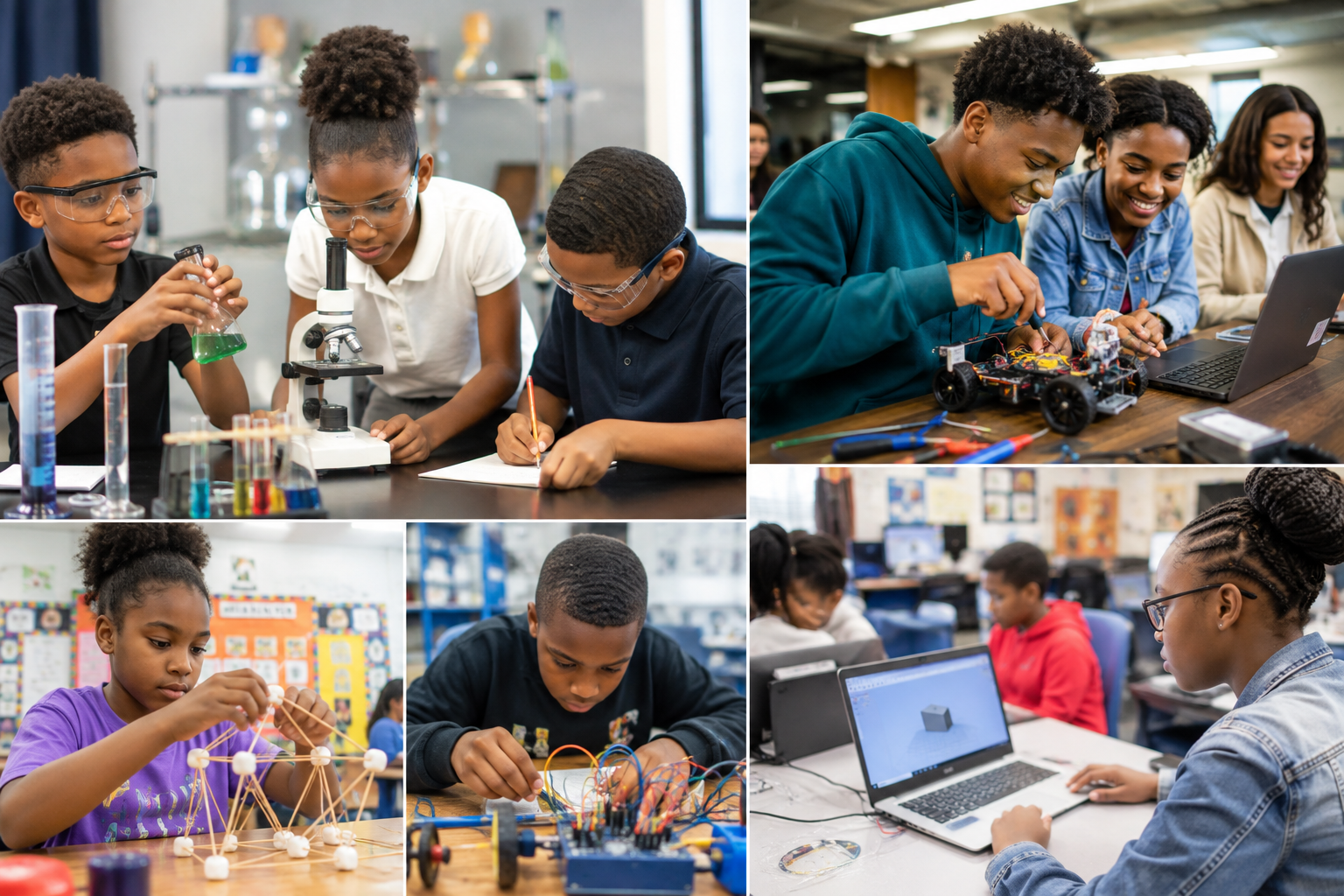
Young people do not need to build a fully autonomous wheelchair to get started. They can experiment with beginner robotics kits, learn basic programming, simulate robot navigation, or develop small projects that use sensors to detect objects.
The goal is to start asking questions, testing ideas, learning from mistakes, and building solutions.
Looking Ahead: The Future of Intelligent Mobility
As AI and robotics continue to advance, autonomous mobility technologies may find applications in a variety of environments, including healthcare facilities, educational institutions, airports, and other public spaces.
Realizing this potential will require continued engineering research, rigorous safety testing, input from people with disabilities, and attention to affordability and accessibility.
The work of engineers and multidisciplinary teams will help determine how these technologies develop and how they can be used responsibly.
For STEM students, this field offers an important lesson: innovation is not just about creating something new. It is about understanding a problem, bringing together the right skills, and developing technology that can make a meaningful difference.
STEM Nastics Final Thought
The future of AI and robotics will be shaped by people who combine technical knowledge with creativity, curiosity, and a desire to solve problems.
David Nyarko and his team’s autonomous wheelchair project offers an opportunity to explore how engineering can connect technological innovation with human needs.
For the next generation of STEM innovators, the challenge is clear: Don’t just imagine the future. Learn the skills to help build it.
STEM Nastics Magazine celebrates the scientists, engineers, educators, students, and innovators using science, technology, engineering, and mathematics to shape tomorrow’s world.
Suggested website categories: AI & Robotics · Engineering Zone · STEM Heroes · Future Jobs
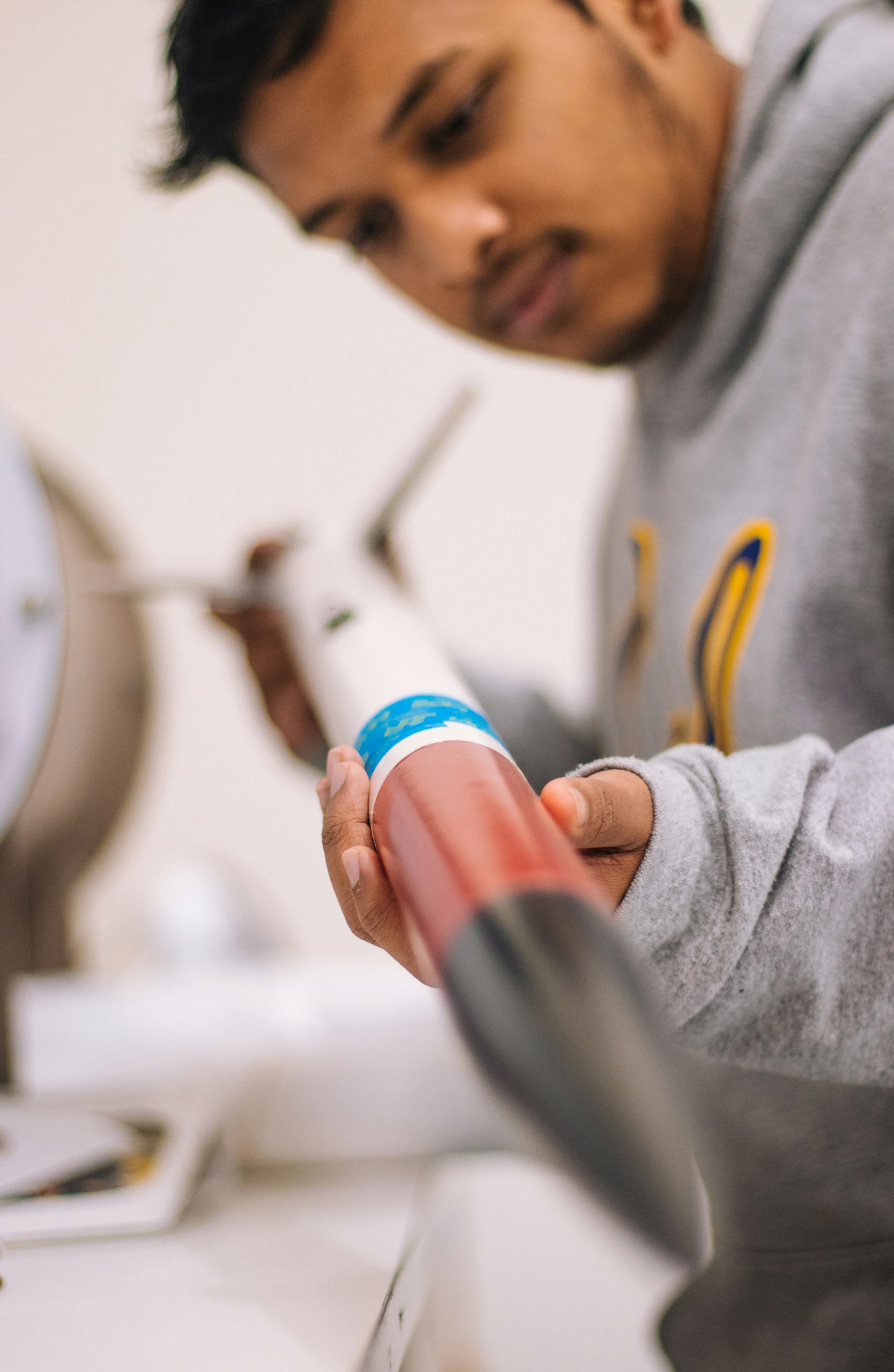
Suggested featured image: David Nyarko and his team working on an autonomous wheelchair in a robotics laboratory, with visible sensors and engineering equipment.
Editorial note: The article is structured so you can insert David’s actual answers without rewriting the rest. Before publication, verify the wheelchair’s specific capabilities, the team’s technical methods, and any claims about testing or real-world use with David.