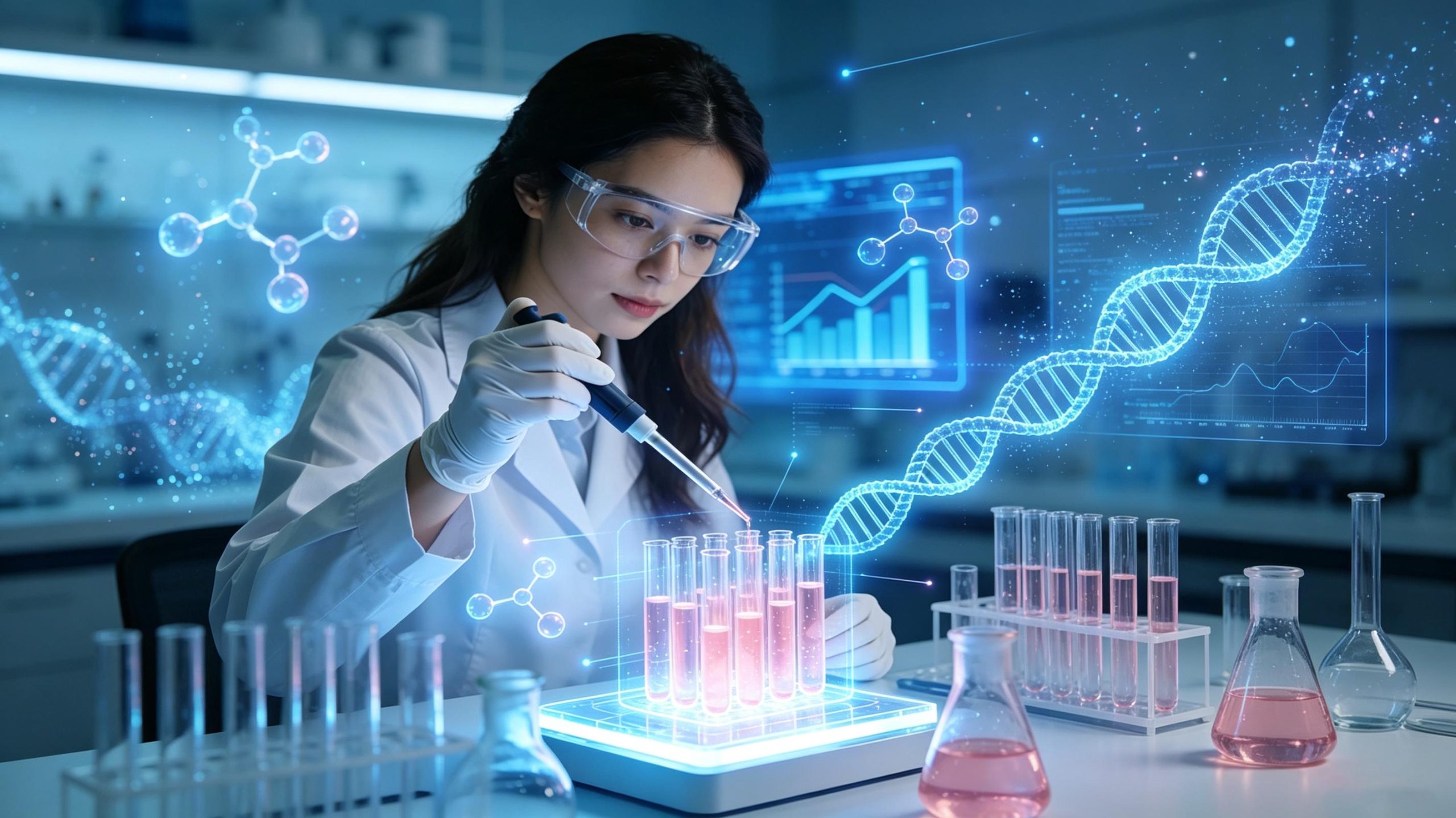
How biotechnology, genetic research, and cellular engineering could transform healthcare.
magine a future where doctors can use a patient’s own cells to help repair damaged tissue, where diseases are detected earlier, and where treatments are designed around the biology of an individual.
This future is becoming a subject of serious scientific research.
Welcome to biotechnology, a field that combines biology, engineering, chemistry, and computer science to develop new ways of solving problems in medicine, agriculture, and the environment.
Cells: The Building Blocks of Life
Every living organism is made of cells. These microscopic structures perform the essential activities that keep organisms alive.
Inside cells, DNA contains genetic instructions that influence how living things develop and function.
Scientists study these instructions to understand inherited diseases, investigate how cells behave, and explore new treatments.
One promising area is cell and gene therapy. Depending on the condition, these approaches may involve modifying cells or changing genetic material to treat or prevent disease. Some treatments are already approved for specific conditions, while many other applications remain experimental.
Can Living Cells Be Engineered?
Researchers are investigating how cells can be designed or modified to perform particular functions.
For example, certain immune-cell therapies involve modifying a patient’s immune cells so they can recognize and attack particular cancer cells.
Other research explores growing tissues for medical applications and using engineered microorganisms to produce medicines.
These technologies require careful testing because biological systems are complex. Researchers must evaluate effectiveness, safety, potential side effects, and long-term outcomes.
The Role of Artificial Intelligence
AI can help researchers analyze enormous biological datasets, identify patterns, study proteins, and generate hypotheses for experiments.
However, a computer prediction is not automatically a scientific discovery. Researchers still need laboratory experiments, clinical evidence, and independent verification.
STEM Careers to Watch
- Biomedical engineer
- Molecular biologist
- Genetic researcher
- Biotechnology specialist
- Bioinformatics scientist
- Pharmaceutical researcher
Student STEM Challenge
Design a fictional medical technology that could help patients.
Explain what problem it addresses, what biological process it uses, and what safety questions scientists would need to investigate before testing it.
STEM Nastics takeaway: The future of medicine may depend on understanding life at its smallest scales—and using that knowledge responsibly.