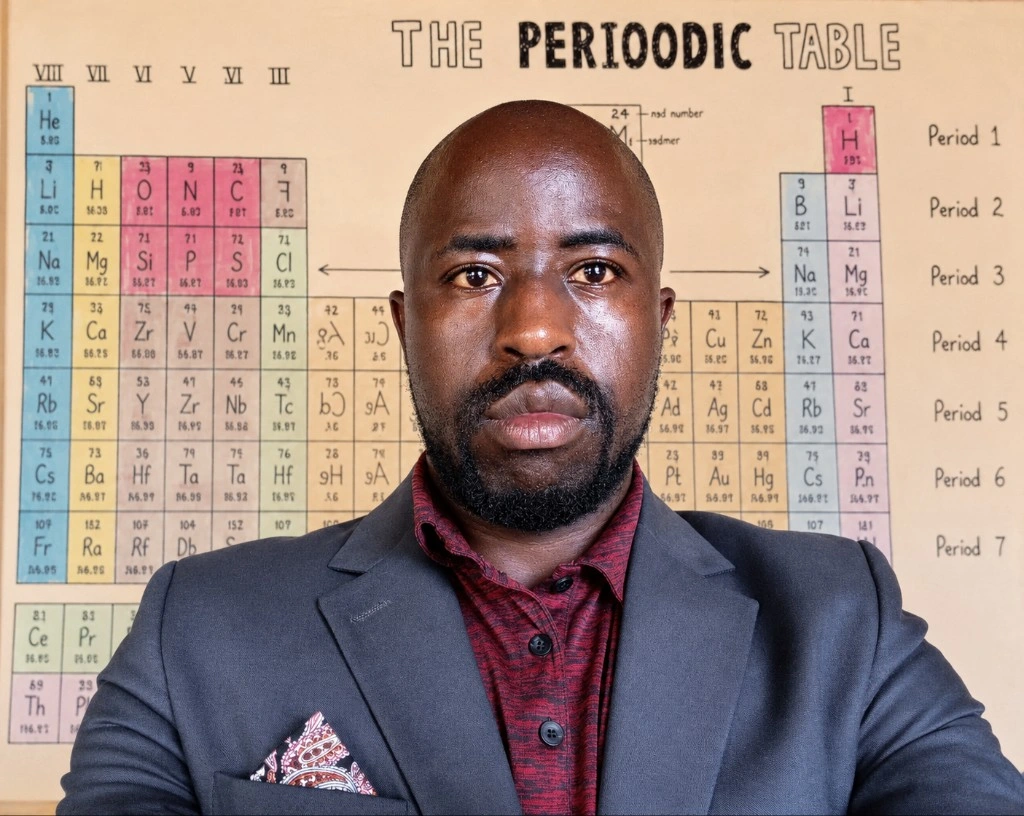
How one educator is transforming science education through hands-on learning, teacher collaboration, and a vision for the future of STEM.
Science is more than a collection of formulas, theories, and laboratory experiments. It is a way of understanding the world, asking meaningful questions, and discovering solutions to real-life problems. For experienced Physics and Chemistry educator and STEM leader Michael Oguta Kabichi, effective science education begins with curiosity and grows through exploration, experimentation, and discovery.
With more than eight years of experience in education, Michael has dedicated his career to creating inquiry-driven learning environments that encourage students to think critically, solve problems, and develop a deeper appreciation for science.
As Head of Science/STEM, he leads curriculum implementation, supports instructional improvement, and promotes student-centred approaches that make learning more engaging, inclusive, and relevant to students’ lives.
His educational philosophy is grounded in a simple but powerful principle: students learn science best when they actively participate in the process of discovery.
Rather than relying exclusively on lectures and memorization, he encourages learners to investigate scientific concepts, test hypotheses, analyse evidence, collaborate with classmates, and develop their own understanding of how the world works.
This approach helps transform science from an abstract subject into a practical tool for understanding everyday life and addressing tomorrow’s challenges.
Michael’s journey illustrates how science education can become a foundation for curiosity, confidence, and innovation.
Through his work as an educator and departmental leader, he is helping promote learning experiences that encourage students to investigate ideas, connect theory with practice, and develop the skills needed to navigate an increasingly complex world.
Through AEPTF, he is extending that commitment by supporting collaboration among educators across international borders.
His work also highlights an important opportunity for schools: to prepare learners not simply to understand the world as it exists today, but to help shape the world they will inherit tomorrow.
As AI, robotics, climate technology, and scientific innovation continue to evolve, students will need educators who can nurture both strong subject knowledge and the ability to apply that knowledge creatively and responsibly.
For Michael, the starting point is simple: encourage curiosity, make learning practical, support teachers, and allow students to create.
The future of STEM is not only about what we know. It is about what we are courageous enough to create with what we know.
And that future begins in today’s classroom.
In this interview, Michael Oguta Kabichi shares insights as an experienced Physics and Chemistry educator and STEM leader with 8+ years of experience creating inquiry-driven learning environments that foster critical thinking, problem-solving, and scientific curiosity. He currently serves as Head of Science/STEM, leading curriculum implementation, instructional improvement, and student-centred science education.
SM: What inspired you to pursue Physics and Chemistry education?
Michael: My journey into Physics and Chemistry education was inspired by my curiosity about how the world works and my desire to help young people develop that same curiosity. Physics gave me a powerful way to understand everyday phenomena, from motion and energy to electricity, sound, and light, while Chemistry helped me understand the materials, substances, and processes that shape our world.
Over time, I realized that I did not simply want to learn Science; I wanted to help learners experience the excitement of discovering it for themselves. That realization led me to pursue a Bachelor of Education (Science), with Chemistry and Physics, at Egerton University in Kenya.
My academic credentials were later evaluated by SpanTran/The Evaluation Company, which confirmed my qualification as equivalent to a U.S. Bachelor’s degree in Education with a concentration in Physics.
This academic foundation, combined with my classroom experience, has shaped my career as a Science educator. For me, teaching Science is not simply about transferring knowledge. It is about helping learners ask meaningful questions, investigate evidence, explain phenomena, and apply their understanding to real-world challenges.
SM: How did you transition from educator to STEM leader?
Michael: The transition grew naturally from my classroom experience. As I taught Physics and Chemistry, I began looking beyond examination performance and asking a bigger question: How can Science education prepare learners not only to understand knowledge, but also to use it to solve problems?
This question influenced the way I approached teaching. I increasingly incorporated inquiry, practical investigations, projects, locally available materials, and technology into my lessons. As my experience grew, I also took on greater leadership responsibilities and currently serve as Head of the Science and Mathematics Department, with a focus on strengthening Science, Technology, Engineering and Mathematics (STEM) learning in my school.
My leadership eventually expanded beyond my school through the African-European Physics Teachers Forum (AEPTF), where I serve as Co-Founder and Director of Strategic Partnerships. Through AEPTF, I work with educators and partners across Africa, Europe, the Middle East and Asia to promote innovative Physics teaching, professional collaboration and practical STEM education.
I see STEM leadership as an extension of teaching: creating conditions in which teachers and learners can become curious thinkers, problem-solvers and creators.
SM: Why is inquiry-based learning so powerful?
Michael: Inquiry-based learning transforms students from passive recipients of information into active participants in the learning process.
Instead of beginning with, “Here is the formula; memorize it,” we can begin with a phenomenon or problem and ask: What do you observe? Why might this be happening? What could we investigate? What evidence would support our explanation?
This process develops curiosity, critical thinking, scientific reasoning, and independence. It also helps learners understand that Science is not simply a collection of facts; it is a process of asking questions, investigating evidence, and making sense of the world.
When students discover concepts through investigation, they are more likely to understand not only the answer, but also the reasoning behind it.
SM: How does hands-on experimentation change the way students learn?
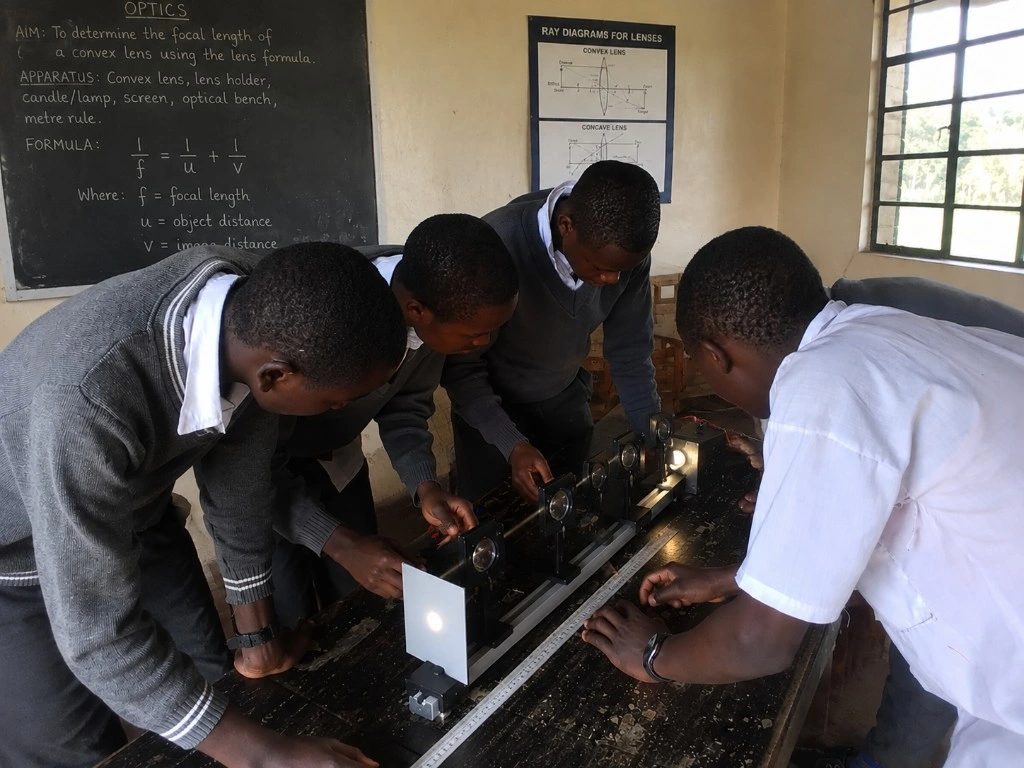
Michael: Hands-on experimentation makes abstract ideas tangible.
When students measure, build, test, observe, make mistakes, and improve their designs, they begin connecting scientific concepts with real-world experiences. A Physics equation becomes much more meaningful when students can see and measure the phenomenon it describes.
For example, I encourage students to work with low-cost and locally available materials to investigate scientific principles. A simple project such as designing and constructing a solar cooker can bring together Physics, environmental awareness, design thinking, measurement, problem-solving, and teamwork.
This approach is particularly important in contexts where sophisticated laboratory equipment may not always be available. Limited resources should not mean limited opportunities for scientific inquiry.
The goal is not simply for students to complete an experiment. It is to give them opportunities to think, investigate, and create like scientists and engineers.
SM: How can schools prepare students for future STEM careers?
Michael: Schools need to move beyond preparing students only to reproduce information in examinations. They should create opportunities for learners to identify problems, ask questions, investigate, design solutions, build, test, learn from failure, improve, and communicate their ideas.
I believe a powerful STEM pathway is:
REAL-LIFE PROBLEM → QUESTION → INVESTIGATION → DESIGN → BUILD → TEST → IMPROVE → IMPACT
Students also need communication, collaboration, creativity, digital literacy, ethical reasoning, and the ability to work responsibly with emerging technologies such as AI.
Most importantly, schools should help learners see themselves not merely as consumers of knowledge, but as people capable of creating solutions and making a meaningful contribution to society.
SM: How is AI changing STEM education?
Michael: AI is creating new possibilities in STEM education by giving teachers and learners additional ways to explore ideas, analyze information, simulate phenomena, receive feedback, and personalize learning.
However, I believe AI should augment human thinking, not replace it.
Students still need to ask meaningful questions, evaluate evidence, conduct experiments, think critically and understand the Science behind an answer. A student who can generate an answer using AI but cannot explain, evaluate or test that answer has not necessarily developed scientific understanding.
The opportunity is to use AI as a learning partner while strengthening the uniquely human abilities of curiosity, critical thinking, creativity, collaboration, and ethical decision-making.
The real question is not simply how AI can give students answers, but how we can use AI to help students ask better questions and think more deeply.
SM: What inspired the African-European Physics Teachers Forum?
Michael: The inspiration came from recognizing that Physics teachers across different countries often face similar challenges, yet there are enormous opportunities to learn from one another.
I co-founded the African-European Physics Teachers Forum (AEPTF) to create a platform where Physics educators can collaborate, exchange practical teaching strategies, support professional development, and build meaningful partnerships across regions.
What began with a focus on connecting educators across Africa and Europe has grown into a global network with partners in regions including the Middle East, India, Pakistan, and Malaysia.
This growth reflects a shared belief that Physics education can be strengthened when educators learn from one another across borders.
We believe that access to innovative Physics education should not depend entirely on geography or the resources available in a particular school.
Our vision is to strengthen teachers so that they can, in turn, create better learning experiences and greater opportunities for their students.
For me, AEPTF is about building bridges—between educators, countries, cultures, and ideas—so that good practices can travel beyond the classrooms where they originate.
SM: What should STEM education look like in 2035–2050?
Michael: By 2035–2050, I hope STEM education will become much more problem-centered, interdisciplinary, inclusive, and connected to real community needs.
Students should not only study climate change, energy, water, health, agriculture, or technology as textbook topics. They should have opportunities to investigate authentic challenges connected to their communities and develop practical solutions.
I envision classrooms where students collaborate across disciplines, use digital tools and AI responsibly, conduct experiments, build prototypes, work with locally available materials, and connect with learners and educators globally.
STEM education should also become increasingly connected to entrepreneurship and community impact, helping learners understand that scientific knowledge can be transformed into practical solutions and opportunities.
The future STEM classroom should not simply ask:
“What do you know?”
It should increasingly ask:
“What problem can you understand, what solution can you create, and what impact can you make?”
SM: What one thing should schools make today?
Michael: Make learning more connected to real life.
Students should regularly have opportunities to take concepts from the classroom and apply them to problems they can see around them.
A Physics lesson should not end with a formula. A Chemistry lesson should not end with a definition. Learning should lead to investigation, application and creation.
Even where resources are limited, teachers can begin with the environment around them and use locally available materials to create meaningful learning experiences.
For example, a student does not need an expensive laboratory to investigate energy, heat, motion, sound, or simple machines. The world around them is already a laboratory full of questions.
We should move from asking students only to “learn the answer” toward asking them to “investigate the problem.”
SM: What message would you give the next generation of STEM innovators?
Michael: Do not be afraid to ask questions; start small and solve problems that matter.
You do not need to wait until you have a sophisticated laboratory, expensive equipment or perfect conditions before becoming an innovator.
Look around you. Identify a problem. Ask questions. Investigate. Build something. Test it. Learn from failure. Improve it. Then try again.
Remember that innovation is not only about creating impressive technology. Sometimes innovation means finding a simple, affordable, and locally relevant solution to a real problem.
Your curiosity can become an idea.
Your idea can become a prototype.
Your prototype can become a solution.
And your solution can create impact.
The future of STEM is not only about what we know.
It is about what we are courageous enough to create with what we know.