Artificial intelligence is transforming education, employment, science, and the global economy. But while technology companies race to develop increasingly powerful AI systems, America’s schools face a difficult question: Are we preparing students to lead this revolution, or simply teaching them to live with it?
THE OPENING QUESTION: WHO IS PREPARING OUR CHILDREN FOR THE AI FUTURE?
Artificial intelligence is no longer a technology reserved for scientists, computer programmers, or major technology companies. It has entered everyday life.
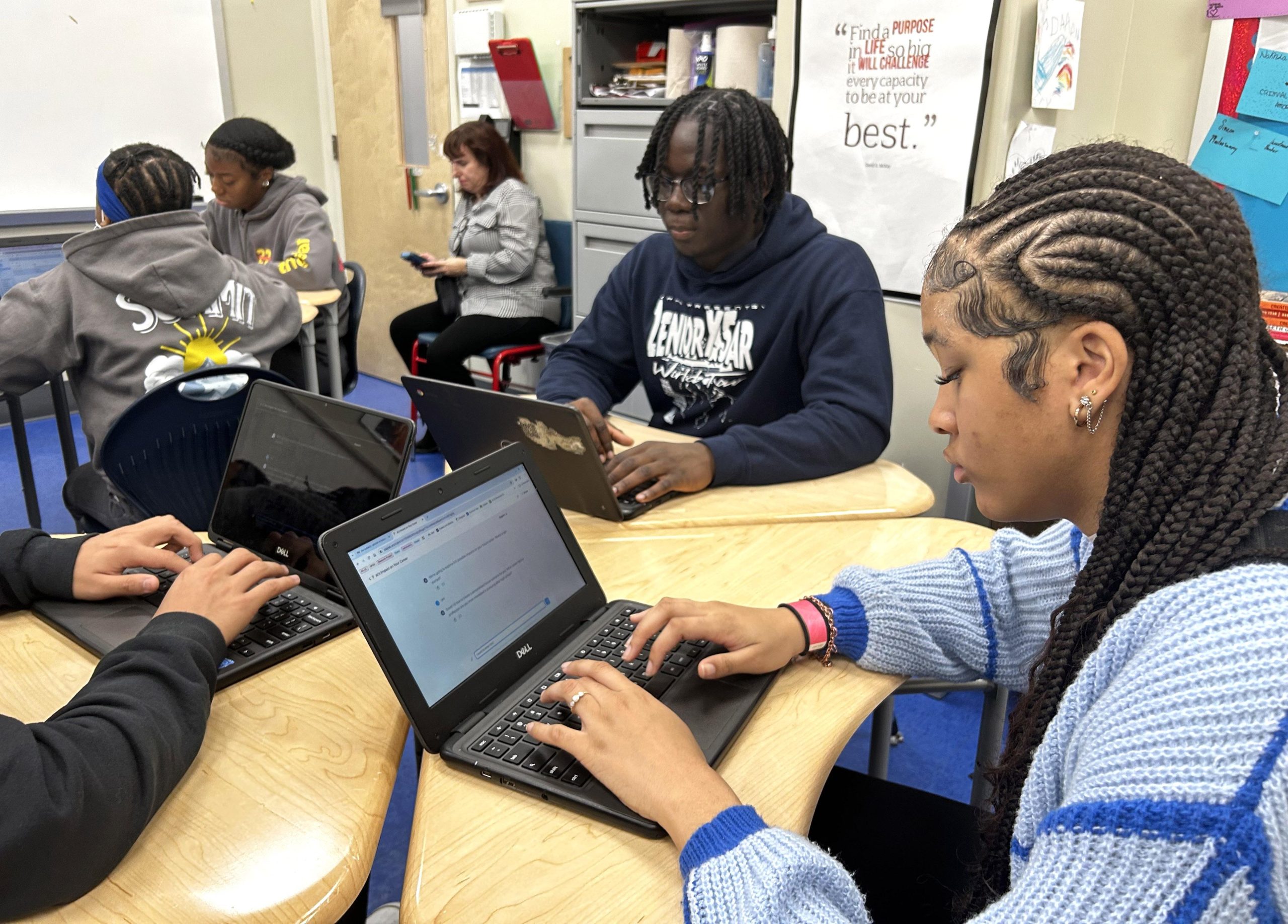
Students are using AI to research assignments, generate ideas, summarize information, solve problems, and explore subjects that once required hours of traditional research. Teachers are experimenting with AI-assisted lesson planning, personalized instruction, and automated feedback. Businesses are introducing AI into their operations, while universities and research institutions are exploring ways to use it to accelerate scientific discoveries.
The transformation is happening at extraordinary speed.
Yet one institution responsible for preparing the next generation is struggling to keep pace: America’s public education system.
For decades, schools have been built around traditional subjects, established teaching methods, standardized assessments, and academic schedules. These systems have served important purposes, but the world students are entering is changing.
The next generation will compete in an economy where understanding technology, analyzing information, solving complex problems, and adapting to new tools will become increasingly important.
Students will need more than the ability to operate a computer or use a smartphone. They will need to understand how artificial intelligence works, how data influences decisions, how algorithms affect society, and how technology can be used to solve real problems.
The challenge is enormous.
America cannot simply purchase computers, subscribe to AI software, and declare its education system prepared for the future.
It must rethink how students learn, how teachers are trained, how schools measure achievement, and how communities prepare young people for emerging careers.
The AI revolution is moving faster than our schools. The question is whether America’s education system can change before an entire generation falls behind.
1. THE TECHNOLOGY REVOLUTION HAS ALREADY ENTERED THE CLASSROOM
The arrival of generative AI has fundamentally changed the educational environment.
Tools that can generate written explanations, answer questions, assist with mathematics, produce computer code, and summarize complex information are now widely accessible.
Students no longer need to wait until they reach college to encounter advanced digital tools. They can experiment with AI while attending middle school or high school.
This creates opportunities, but it also creates serious questions.
Are students learning how to think critically, or are they becoming dependent on technology to provide answers?
Are teachers receiving enough training to distinguish effective AI-assisted learning from technology that simply completes assignments?
Are school districts establishing clear policies about student privacy, accuracy, academic integrity, and responsible use?
These questions cannot be ignored.
A September 2026 IBM-commissioned survey of more than 2,000 K–12 educators and parents found that AI was already being used regularly in many classrooms.
The survey reported that 76% of middle-school educators and 73% of high-school educators said AI was used in their classrooms at least weekly.
However, only 20% of surveyed K–12 educators reported receiving extensive AI training.
The difference between technology adoption and teacher preparation is significant.
Schools are introducing tools faster than many educators are receiving the training needed to use them effectively.
IBM Newsroom
This is a major warning.
Technology should never be introduced simply because it is new or popular. It should be introduced because it improves learning, strengthens instruction, and prepares students for meaningful opportunities.
America needs an educational strategy that places learning ahead of technological excitement.
2. THE BIGGEST PROBLEM: STUDENTS ARE LEARNING ABOUT TECHNOLOGY WITHOUT NECESSARILY UNDERSTANDING IT
There is a major difference between using technology and understanding technology.
A student may know how to use an AI chatbot but have little understanding of machine learning, algorithms, data, computer programming, or the limitations of AI-generated information.
A student may use an application to generate a science report without understanding the scientific principles behind the report.
A student may receive an AI-generated mathematics solution without understanding the equations used to reach the answer.
This creates a dangerous educational shortcut.
If students become accustomed to receiving answers without developing the ability to reason independently, they may struggle when confronted with unfamiliar problems that require original thinking.
The objective of AI education should not be to teach students how to make machines do their homework.
It should be to teach them how to understand machines, question their results, evaluate their limitations, and eventually create new technologies.
Consider the difference between two students.
The first student uses AI to write a computer program but cannot explain how the program works.
The second student uses AI to explore programming concepts, studies the generated code, identifies mistakes, tests different solutions, and develops an improved application.
Both students have used AI.
But only the second student has turned the technology into a meaningful learning experience.
This distinction must become central to America’s educational strategy.
Schools should teach students to become informed users, critical evaluators, and eventually creators of artificial intelligence.
3. THE TEACHER PREPARATION CRISIS
One of the most important questions surrounding AI in education is whether teachers are being prepared to lead the transition.
Teachers remain central to student development.
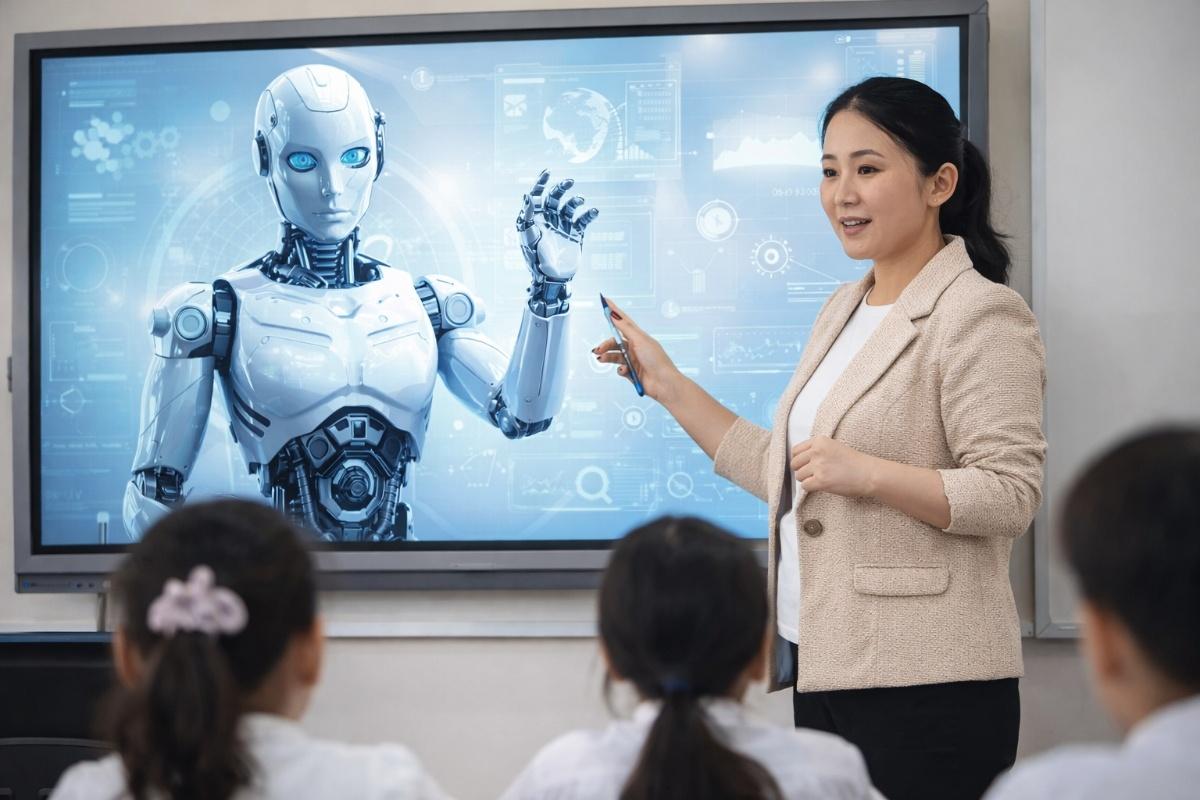
They explain difficult concepts, recognize learning challenges, encourage curiosity, evaluate progress, and help students develop the social and intellectual skills needed to succeed.
AI may assist with some instructional responsibilities, but it cannot replace the importance of human judgment, relationships, encouragement, and professional teaching expertise.
Unfortunately, many educators are being asked to navigate rapidly changing technology without sufficient preparation.
UNESCO recognized this challenge when it introduced its AI Competency Framework for Teachers in 2024.
The framework identifies 15 competencies across five areas:
- Human-centered thinking.
- Ethics of artificial intelligence.
- AI foundations and applications.
- AI-supported teaching methods.
- AI for professional learning.
It also establishes progression levels intended to help educators develop their capabilities over time.
UNESCO
This is an important starting point.
However, publishing a framework is not the same as preparing millions of teachers to implement it.
School districts must provide ongoing professional development, practical classroom training, technical support, and time for teachers to experiment with educational applications.
Teachers should not be expected to become AI experts overnight.
They should receive the resources and support necessary to understand how the technology works and when it is appropriate to use it.
The AI classroom of tomorrow cannot succeed without investing in the teachers who lead it.
4. AMERICA’S AI EDUCATION GAP COULD BECOME AN ECONOMIC DIVIDE
Perhaps the most troubling consequence of the AI revolution is the possibility that it could widen existing educational and economic inequalities.
Students attending well-funded schools may have access to advanced computer science courses, robotics laboratories, AI learning tools, technology mentors, and specialized programs.
Students attending financially disadvantaged schools may have fewer opportunities.
This is not simply a question of who owns a computer.
It is a question of who receives meaningful instruction.
A student with access to an AI application but no guidance may learn very little about the technology.
A student with access to the same application, qualified teachers, structured instruction, and opportunities to build projects may develop valuable technical skills.
The difference is educational opportunity.
There is also a growing concern about the uneven adoption of AI among educators.
RAND’s research on AI adoption during the 2023–2024 school year found that approximately 25% of surveyed teachers reported using AI tools for instructional planning or teaching.
The research also found that teachers in higher-poverty schools were less likely to report using AI tools than those in lower-poverty schools.
ERIC+1
Although these findings reflect an earlier period of AI adoption, they illustrate a problem that policymakers must monitor.
If schools with fewer resources also have less access to effective AI training, the educational opportunity gap could become an AI opportunity gap.
This should concern every community.
Students from low-income families should not have to compete against classmates who have received years of exposure to advanced technology while they are just beginning to understand it.
AI literacy must become accessible to all students, not just those attending schools with the largest technology budgets.
5. CHINA AND AMERICA: THE GLOBAL AI EDUCATION COMPETITION
The competition surrounding artificial intelligence is not limited to technology companies.
It is also a competition involving education, research, engineering, scientific talent, and national investment.
China and the United States understand that the next generation of technological leadership will depend partly on the quality of their educational and research systems.
Both countries are investing in AI development, advanced computing, robotics, and scientific research.
But the competition begins much earlier than the university level.
It begins in classrooms.
Students who develop strong mathematics, science, computer science, and problem-solving skills are better positioned to enter advanced technical fields.
America has tremendous advantages.
It has world-class research universities, major technology companies, a strong entrepreneurial culture, and a history of scientific innovation.
However, these advantages do not guarantee future leadership.
The United States must ensure that its students have the educational foundation needed to participate in emerging industries.
China’s investment in science, technology, engineering, and mathematics education should be taken seriously.
At the same time, America should not assume that copying another country’s educational system will automatically produce better results.
The United States must develop an approach that combines academic excellence, creativity, independent thinking, entrepreneurship, scientific research, and responsible technological development.
The real question is not simply which country has the most advanced AI software.
It is which country can consistently develop the people capable of creating, improving, and responsibly using the next generation of technology.
America’s future competitiveness will depend on its ability to develop talent at every educational level.
6. AI COULD CHANGE THE WAY STUDENTS LEARN
One of the most promising possibilities of artificial intelligence is personalized learning.
Traditional classrooms often require one teacher to work with students who have different learning speeds, academic strengths, and educational needs.
Some students understand a lesson quickly.
Others need additional explanations, examples, practice, or individualized attention.
AI systems may help teachers address some of these differences.
For example, an AI-assisted learning platform could provide additional mathematics exercises to a student who needs practice with fractions.
Another student studying biology could receive explanations at different reading levels.
A student learning computer programming could receive feedback on errors and suggestions for further exploration.
A language learner could practice vocabulary and conversation.
These capabilities could make educational support more accessible.
However, personalization must be designed carefully.
AI-generated explanations can contain mistakes. Automated systems may misunderstand a student’s needs. Recommendations may reflect biases in the data used to develop the software.
Students should not be placed into permanent educational categories based on automated predictions.
AI should help teachers understand learning needs, not make important educational decisions without human oversight.
The OECD’s Digital Education Outlook 2026 examines both the opportunities and risks of generative AI in education.
It identifies potential benefits involving personalized support, improved feedback, and assessment.
But it also warns that students who depend too heavily on AI-generated answers may experience reduced mental effort and weaker engagement with the learning process.
In other words, completing an assignment successfully does not necessarily mean a student has learned the material.
OECD
This is one of the most important lessons for educators.
AI should support the learning process, not replace it.
7. THE DANGER OF CREATING A GENERATION THAT CANNOT THINK INDEPENDENTLY
There is an uncomfortable question that schools must confront.
What happens when students become so dependent on AI that they lose confidence in their own ability to solve problems?
Education is not simply about producing correct answers.
It is about developing the ability to ask questions, investigate evidence, recognize mistakes, form arguments, and reach conclusions.
Students need opportunities to struggle productively with difficult problems.
They need to experiment, make mistakes, reconsider assumptions, and discover solutions.
These experiences develop intellectual independence.
If an AI system immediately provides every answer, students may miss important opportunities to build those skills.
Schools should therefore establish clear distinctions between appropriate and inappropriate AI use.
For example:
- Students may use AI to explore a subject before beginning a research assignment.
- Students may ask AI to explain a difficult scientific concept in simpler language.
- Students may use AI to identify weaknesses in their writing.
- Students should still demonstrate their own understanding of mathematics and science.
- Students should disclose AI assistance when required by school policy.
- Students should verify important information using credible sources.
The goal is not to eliminate AI from education.
The goal is to ensure that students remain active participants in their own learning.
An educated person should be able to use technology without surrendering independent judgment.
8. THE AI JOB MARKET IS COMING FASTER THAN CAREER COUNSELING
Another major challenge is the relationship between education and employment.
Artificial intelligence is changing the skills employers need.
Companies are exploring AI applications in accounting, customer service, manufacturing, healthcare, engineering, logistics, financial services, and research.
Some existing jobs will change substantially. Certain tasks may be automated, while new responsibilities and occupations may emerge.
The precise number of jobs that will disappear or be created remains uncertain.
However, it is reasonable to expect that many future workers will need some understanding of AI, data, digital systems, and technology-assisted problem-solving.
This raises an important question:
Are American high schools preparing students for the careers that are emerging?
Many students receive career guidance based on traditional occupational categories.
But the next generation needs exposure to a wider range of possibilities.
Consider these emerging and evolving career areas:
Artificial intelligence and computer science
- AI software development.
- Machine learning engineering.
- Data analysis.
- AI systems testing.
- Responsible AI governance.
Robotics and advanced manufacturing
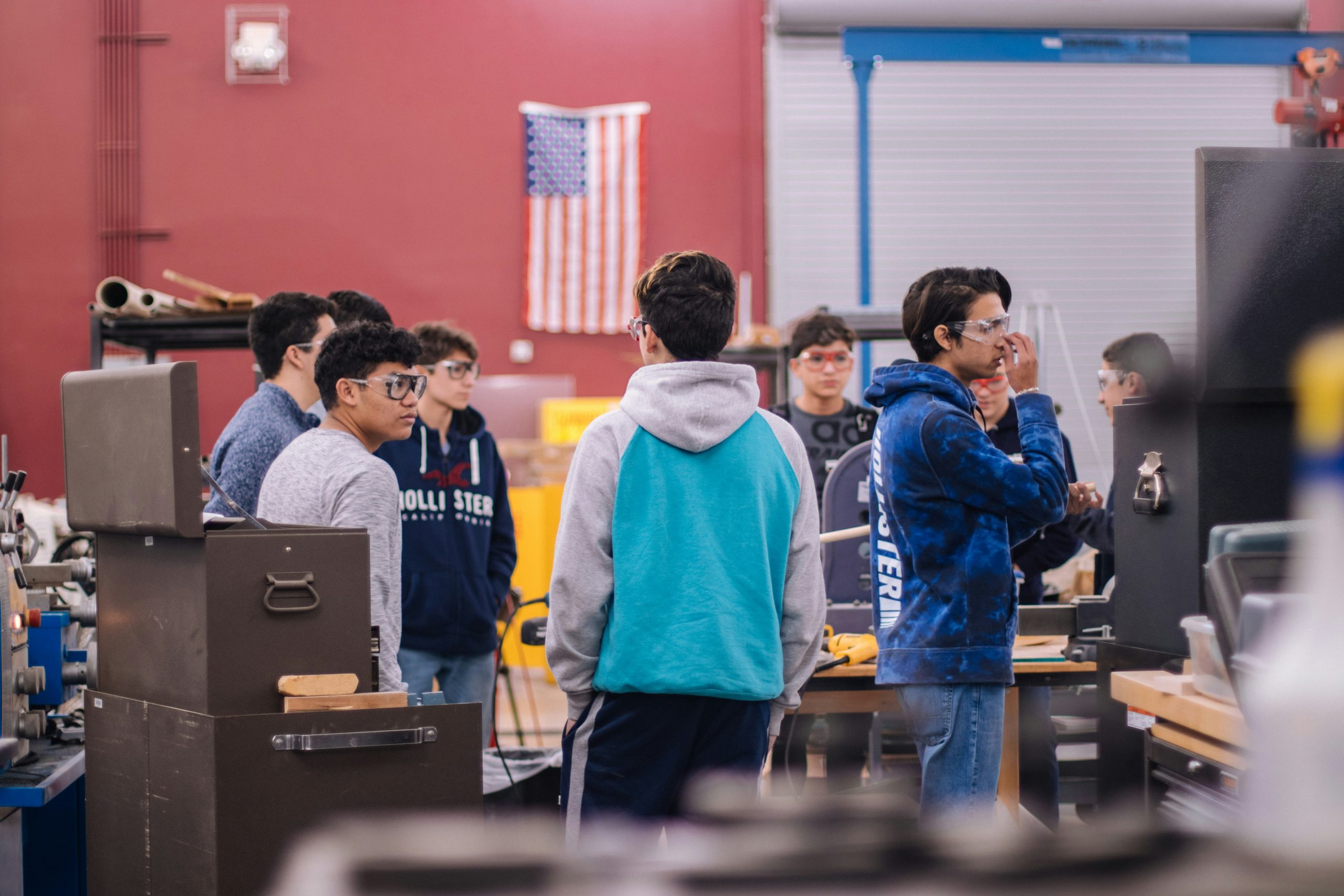
- Robotics engineering.
- Automation technology.
- Industrial maintenance.
- Mechatronics.
- Advanced manufacturing operations.
Healthcare and biotechnology
- Biomedical engineering.
- Health informatics.
- Medical technology.
- Biotechnology research.
- Computational biology.
Energy and environmental science
- Renewable energy engineering.
- Battery technology.
- Environmental data analysis.
- Smart-grid development.
- Climate technology.
These careers require different levels of education and training.
Not every student needs a four-year degree.
Community colleges, technical schools, apprenticeships, industry certifications, and universities should all become part of the national AI workforce strategy.
Students need to understand that STEM is not one career path.
It is a broad collection of opportunities that can lead to meaningful employment, entrepreneurship, and scientific discovery.
9. HBCUs AND THE FUTURE OF BLACK AI INNOVATION
The AI revolution also creates an important opportunity for Historically Black Colleges and Universities.
HBCUs have a significant role to play in developing America’s next generation of technology professionals.
However, their participation must extend beyond preparing students to work for existing technology companies.
They should also become centers of research, entrepreneurship, innovation, and technological ownership.
Imagine a national network connecting HBCUs with technology companies, federal research institutions, school districts, and community organizations.
Students could participate in AI research projects, develop robotics applications, study cybersecurity, explore biotechnology, and create technology businesses.
High school students could receive early exposure to HBCU engineering and computer science programs.
Universities could establish stronger partnerships with local businesses to provide internships and technical training.
There should also be greater support for Black technology entrepreneurs.
The objective should be to develop people who can build companies, create intellectual property, develop new products, and participate in decisions about how technology is designed and deployed.
This matters because the AI economy will not be shaped only by people who use technology.
It will also be shaped by those who own, develop, finance, and govern it.
Black students should have opportunities to participate in every part of that process.
America cannot afford to exclude talented people from its technological future.
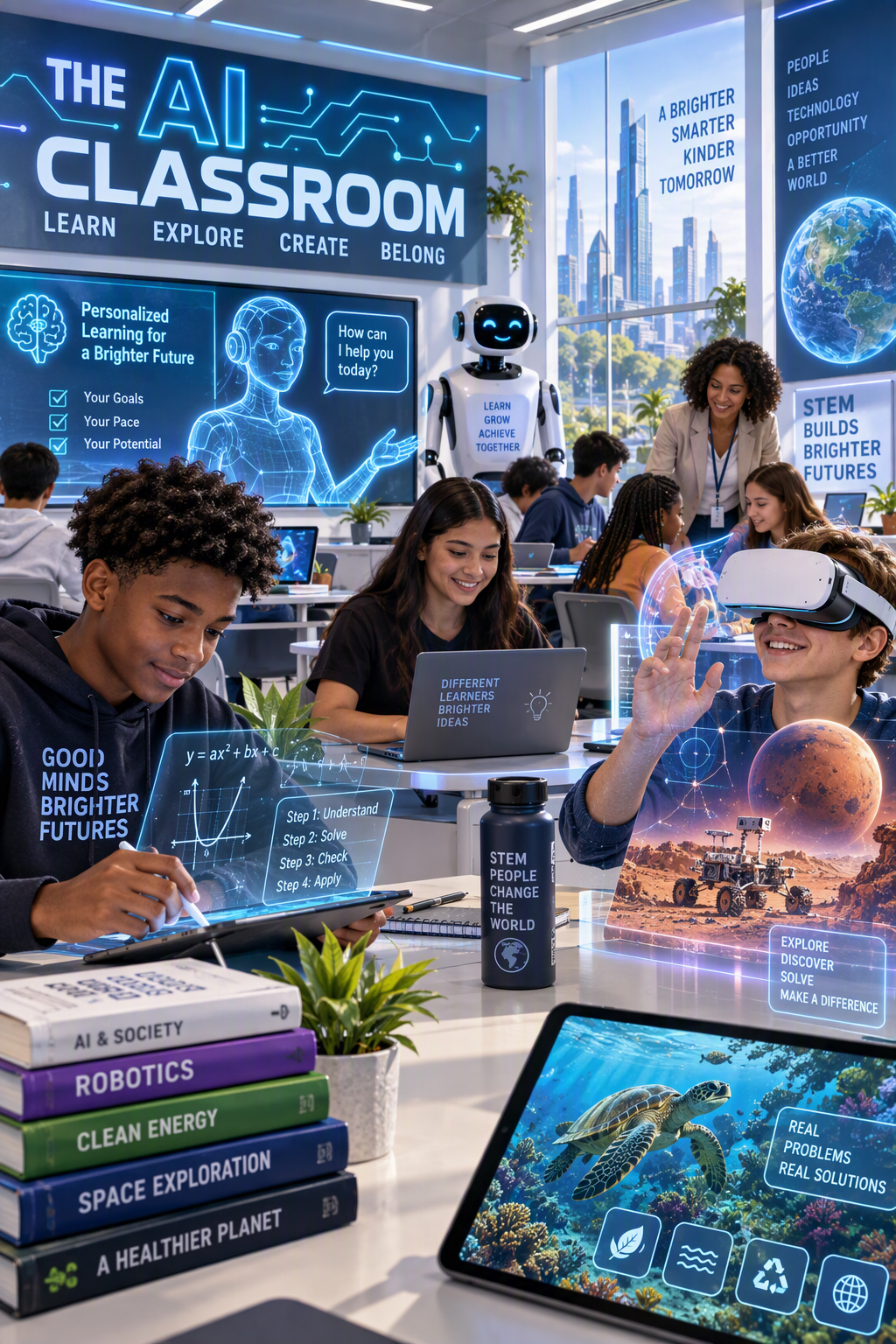
10. THE CLASSROOM OF 2030 MUST LOOK DIFFERENT
What should an American classroom look like by 2030?
It should be a place where students do more than memorize information.
It should be a place where students investigate, design, experiment, collaborate, and create.
Imagine a middle-school mathematics class where students use AI-assisted tools to explore different ways to solve a problem, then explain their reasoning to the teacher.
Imagine a science class where students analyze environmental data and develop recommendations for reducing pollution.
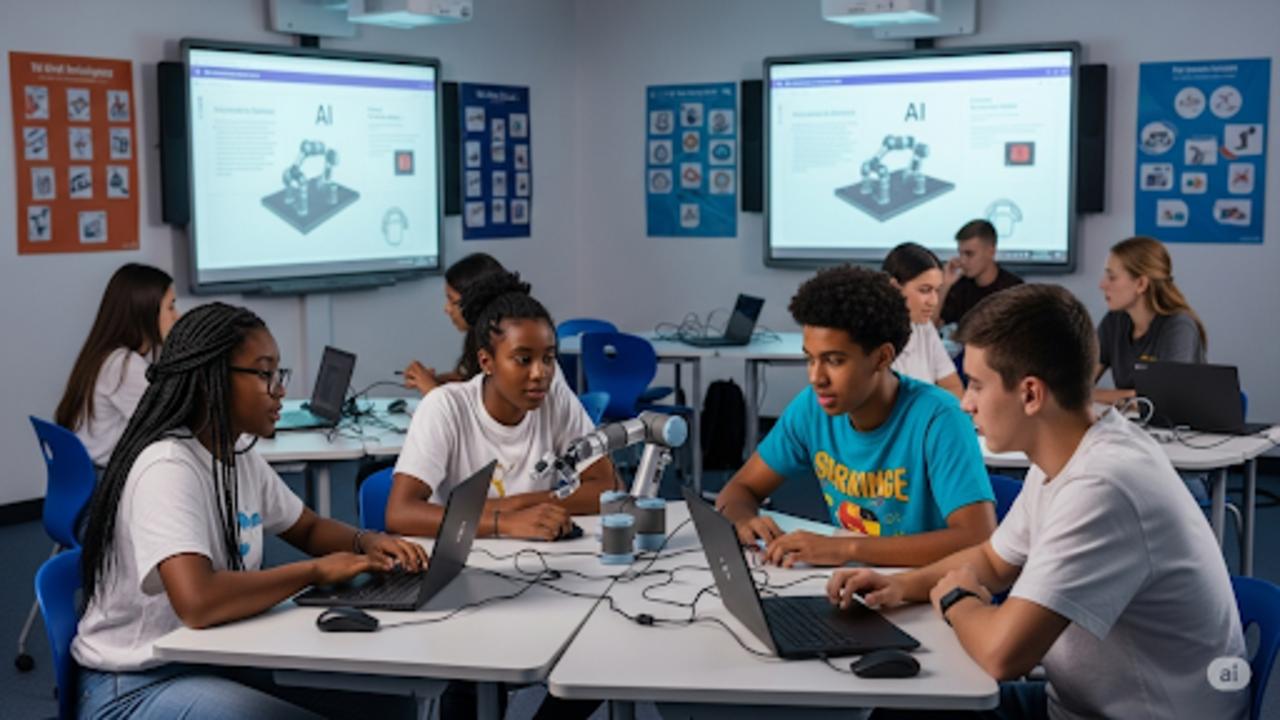
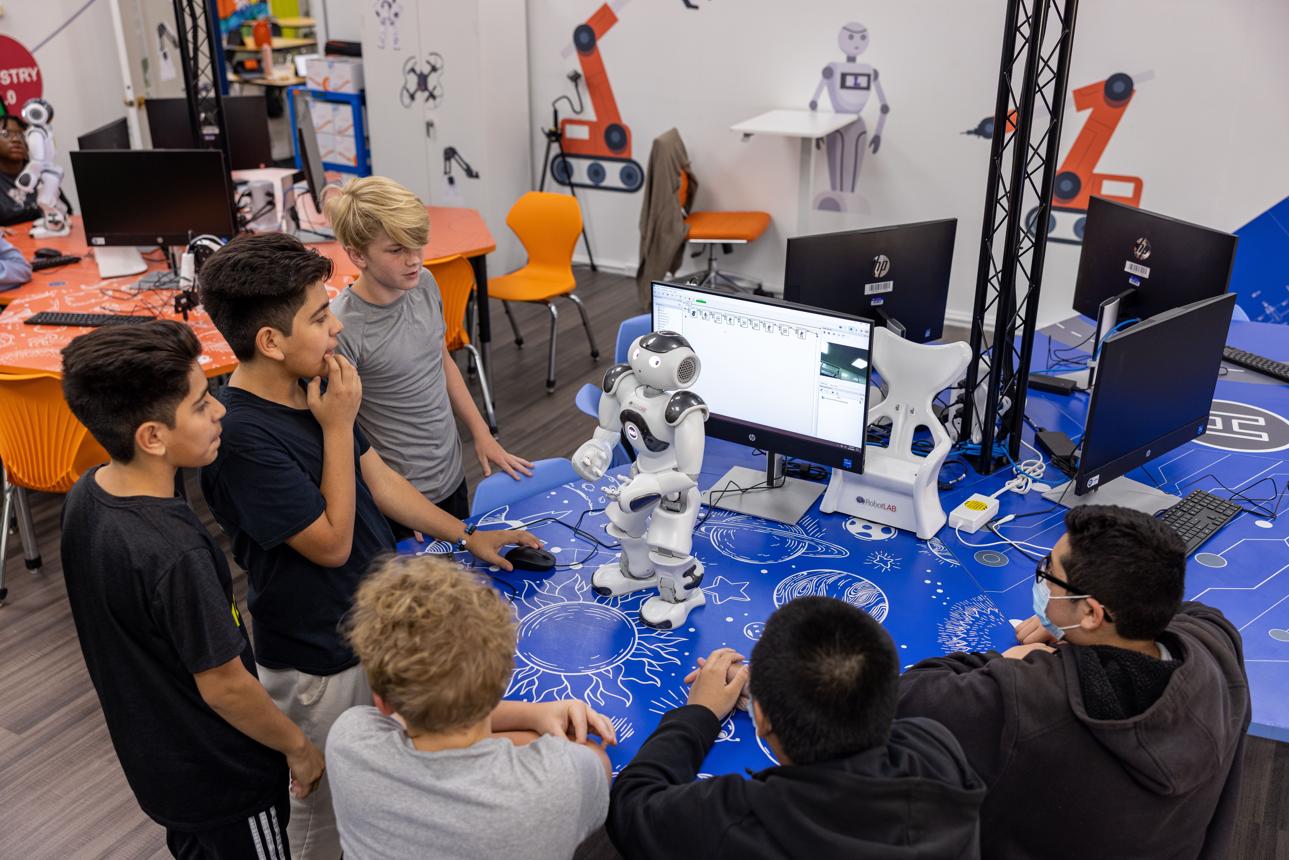
Imagine a robotics class where teams design machines, test their performance, and improve their work.
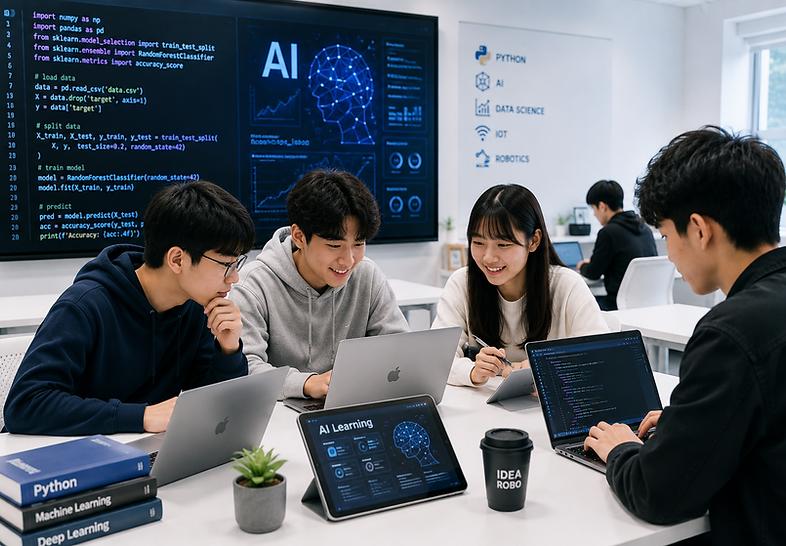
Imagine a computer science class where students learn how AI systems process information and investigate why algorithms sometimes produce inaccurate or unfair results.
Imagine a history class where students use AI to organize research but must verify historical claims against primary and credible sources.
This is a more active approach to education.
Technology should not eliminate reading, writing, mathematics, discussion, experimentation, or human interaction.
It should create new opportunities to strengthen those activities.
The classroom of 2030 should combine the best of traditional education with the possibilities of modern technology.
And teachers should remain central to that experience.
11. WHO IS PROTECTING STUDENTS IN AN AI-POWERED CLASSROOM?
While schools explore the benefits of artificial intelligence, they must also confront the risks.
Student privacy should be one of the highest priorities.
Educational technology platforms may collect information about students, including learning activity, academic performance, interactions, and other personal information.
Schools and parents need to understand what information is collected, how it is stored, who can access it, and whether it is shared with outside companies.
An AI application should not receive unlimited access to student information simply because a school has decided to use it.
There are other concerns as well.
Accuracy: AI systems can produce information that sounds convincing but is incorrect. Students must learn to verify claims.
Bias: AI systems can reflect biases present in their training data or design. Students should understand that technology is not automatically neutral.
Cybersecurity: Schools must protect educational systems against unauthorized access, data breaches, and other digital threats.
Academic integrity: Schools need understandable rules explaining when AI assistance is permitted and when students must complete work independently.
Mental development: Educators should ensure that students continue developing reading, writing, mathematics, communication, and independent reasoning skills.
The U.S. Department of Education’s August 2026 guidance on responsible educational technology emphasizes instructional value, transparency, educator judgment, and evidence of improved student outcomes.
It encourages schools to ask whether a technology tool solves a real learning problem and whether there is evidence that it improves education.
U.S. Department of Education
That is the right standard.
Schools should not measure success by how many AI applications they purchase.
They should measure success by whether students are learning more effectively and developing skills that will serve them throughout their lives.
12. THE NEW DIGITAL DIVIDE: ACCESS IS NOT ENOUGH
For years, discussions about the digital divide focused heavily on whether students had computers and internet access.
Those issues remain important.
But the AI revolution is creating a more complicated challenge.
Students may have access to the same technology but receive very different educational benefits from it.
One student might use AI to develop a science project, explore computer programming, or receive additional explanations of difficult concepts.
Another might use the technology primarily to generate answers without understanding the subject.
The difference is not necessarily the technology itself.
It is the quality of instruction, guidance, and educational opportunity surrounding it.
This is why communities need more than computer distribution programs.
They need AI education programs, trained instructors, community laboratories, technical mentors, and opportunities for students to build actual projects.
Libraries, recreation centers, community colleges, nonprofit organizations, and neighborhood learning centers could all become important partners.
The next digital divide may not be between students who have technology and students who do not.
It may be between students who understand and create technology and students who are only permitted to consume it.
America must address that divide before it becomes another permanent barrier to economic mobility.
13. BALTIMORE: A CITY THAT SHOULD NOT MISS THE AI OPPORTUNITY
The national conversation about artificial intelligence should include cities like Baltimore.
Baltimore has educational institutions, universities, hospitals, businesses, community organizations, and young people with enormous potential.
But those resources must be connected through a coordinated strategy.
The city could develop a Baltimore AI and STEM Education Partnership that brings together schools, colleges, technology companies, nonprofit organizations, and community leaders.
The goal would be to provide students with meaningful exposure to emerging technologies.
Consider five practical initiatives.
A. Community AI Learning Centers
Establish accessible learning spaces where young people can explore AI, coding, robotics, and computer science with qualified instructors.
These centers could operate through partnerships with libraries, community organizations, schools, and colleges.
B. Baltimore Youth Robotics Challenge
Create an annual competition involving students from middle schools and high schools.
Teams could design robots, develop simple AI applications, and solve engineering challenges.
The competition would reward creativity, teamwork, technical understanding, and problem-solving.
C. AI Career Mentorship Network
Connect students with engineers, scientists, programmers, cybersecurity professionals, researchers, and technology entrepreneurs.
Students should be able to see what these careers actually involve.
D. AI and STEM Summer Academies
Offer structured summer programs focused on mathematics, coding, robotics, data science, engineering, and responsible AI use.
Students could complete projects and present their work to families, educators, and community partners.
E. The Baltimore Youth Innovation Fund
Create a small-grant program that supports student technology projects.
Young people with promising ideas could receive funding, mentorship, and access to equipment to develop prototypes and demonstrate their creativity.
Baltimore does not need to wait for a national initiative to begin preparing its young people.
It can build partnerships locally and demonstrate how community-based STEM education can expand opportunity.
The city should consider making AI literacy and STEM access a major part of its long-term economic development strategy.
14. THE RESPONSIBILITY OF PARENTS AND FAMILIES
Schools cannot carry the entire responsibility for preparing children for the AI economy.
Parents and families also have an important role.
They do not need to become computer programmers or artificial intelligence specialists.
But they should become informed about the technology their children are encountering.
Parents can ask schools important questions:
- Does my child’s school have an AI education policy?
- Are students being taught how AI works?
- Are teachers receiving AI training?
- What student information is collected by educational technology platforms?
- Are students learning to verify AI-generated information?
- Are there opportunities to study robotics, computer science, and engineering?
- Are students receiving guidance about future STEM careers?
Families should also encourage curiosity.
A child interested in science should have opportunities to explore scientific subjects.
A student interested in computers should be encouraged to learn how software works.
A teenager interested in engineering should have access to projects that allow them to experiment and build.
The objective is not to pressure every child into a STEM career.
It is to make sure that every child has the opportunity to discover what they can accomplish.
15. THE NATIONAL AI EDUCATION PLAN: SEVEN REFORMS AMERICA SHOULD CONSIDER
America needs a practical strategy that connects technology, education, and economic opportunity.
Stem Nastics proposes seven areas for national action.
Reform 1: Establish AI literacy as a core educational competency.
Students should learn the fundamentals of artificial intelligence, including data, algorithms, machine learning concepts, limitations, ethics, and responsible use.
AI literacy should complement—not replace—mathematics, reading, science, and computer science.
Reform 2: Create a national teacher training initiative.
Federal and state education leaders should support professional development that prepares teachers to use AI responsibly and effectively.
Training should include practical classroom applications, privacy, academic integrity, bias, and evaluation of AI-generated information.
Reform 3: Expand access to computer science and advanced mathematics.
Every student should have a meaningful opportunity to study mathematics, computer science, engineering, and science.
Schools should identify gaps in course availability and work toward making advanced instruction accessible across communities.
Reform 4: Establish stronger school-to-industry partnerships.
Employers should work with educational institutions to provide internships, apprenticeships, mentorships, career exposure, and technical training.
Students need opportunities to understand how their education connects to the workplace.
Reform 5: Invest in underserved communities.
Students in lower-income communities should have access to qualified teachers, reliable technology, AI learning programs, and hands-on STEM opportunities.
Reform 6: Protect students and establish responsible AI standards.
Schools should adopt clear policies addressing student privacy, data security, transparency, bias, academic integrity, and appropriate human oversight.
Reform 7: Measure educational outcomes.
School districts should publish regular reports evaluating whether AI programs improve student understanding, academic performance, teacher effectiveness, and access to opportunity.
Technology investments must be evaluated.
If an application does not improve learning, schools should reconsider whether it deserves continued funding.
These reforms will require investment, coordination, and long-term commitment.
But the cost of failing to prepare the next generation could be far greater.
16. THE BIG QUESTION: WILL AMERICA CREATE AI LEADERS OR AI DEPENDENTS?
This may be the most important question in the entire debate.
America has an opportunity to develop a generation of students who understand artificial intelligence and can use it to solve problems that affect humanity.
Students could develop technologies that improve healthcare, protect the environment, strengthen cybersecurity, advance scientific research, and improve transportation.
They could become entrepreneurs who create new businesses and industries.
They could develop technologies that address challenges their communities have faced for generations.
But that future requires preparation.
If students are only taught to use existing AI applications, they may become dependent on technologies created and controlled by others.
If they are taught mathematics, science, computer programming, engineering, critical thinking, and responsible AI development, they can become participants in creating the next generation of innovation.
This distinction matters for America’s economic future.
The country needs more than consumers of technology.
It needs creators, researchers, inventors, educators, entrepreneurs, and informed citizens.
And that process begins in the classroom.
CONCLUSION: THE FUTURE WILL NOT WAIT FOR OUR EDUCATION SYSTEM
Artificial intelligence is changing the world faster than many institutions can adapt.
Technology companies are moving forward. Businesses are changing how they operate. Universities are researching new applications. Nations are competing for technological leadership.
But America’s education system must answer a fundamental question:
Are we preparing our children to lead the AI revolution, or are we allowing the revolution to pass them by?
The answer will influence more than the next generation of workers.
It will influence America’s economic competitiveness, scientific leadership, technological independence, and ability to create opportunities for future generations.
Schools must evolve.
Teachers must receive better preparation. Students must develop stronger mathematics and science foundations. Communities must expand access to technology education. Universities must strengthen their partnerships with schools and businesses.
And policymakers must recognize that AI education is not a temporary technology trend.
It is becoming an important part of preparing citizens for a changing world.
There is also something important we must remember.
Artificial intelligence may become more powerful, but human creativity, curiosity, judgment, and imagination will remain essential to meaningful innovation.
The objective should never be to create schools where machines do all the thinking.
It should be to create schools where technology helps students think more deeply, explore more possibilities, and accomplish things that once seemed impossible.
America has an opportunity to build an educational system that prepares every child to participate in the future.
But opportunity without action accomplishes very little.
The next generation is already growing up in an AI-powered world.
Our education system must be ready.
The AI revolution will not wait for America’s schools. It is time for America’s schools to catch up.