How Robotics, Artificial Intelligence, and Automation Are Transforming the Workplace and Changing the Future of Human Employment
Introduction: Welcome to the Age of Robots
Imagine walking into work and being greeted by a robot that recognizes your face, understands your instructions, and knows exactly what tasks need to be completed. In manufacturing, robotic machines assemble products with incredible precision. In the hospital, robots assist medical professionals with delicate procedures. In the warehouse, autonomous machines transport packages, organize inventory, and prepare orders for delivery.
Meanwhile, an artificial intelligence system helps employees analyze information, solve problems, and make important business decisions.
This is not a scene from a science-fiction movie. It offers a glimpse into a technological transformation already underway.
Robots are becoming increasingly common in factories, hospitals, warehouses, restaurants, laboratories, farms, and even homes. Advances in artificial intelligence, machine learning, computer vision, and mechanical engineering are making robots more capable than ever before.
But as robots become smarter and more sophisticated, an important question emerges:
Will robots eventually become our future co-workers, or will they replace the human workforce?
For generations, robots were primarily associated with manufacturing and industrial production. Today, however, robotics is expanding into nearly every major industry.
Some robots perform repetitive tasks. Others assist with complex operations that require accuracy and consistency. Newer developments in humanoid robotics are even attempting to create machines capable of working in environments originally designed for people.
The robot revolution could change how businesses operate, how people earn a living, and what students need to learn to succeed.
For the next generation, understanding robotics will be just as important as understanding computers and the internet.
The future workplace may not be humans versus robots.
It may be humans and robots working together.
1. What Exactly Is a Robot?
Before exploring the future of robotics, it is important to understand what a robot actually is.
A robot is a programmable machine designed to perform tasks automatically or with varying degrees of human control.
Robots can be designed to move, sense their surroundings, manipulate objects, process information, and interact with people.
Some robots are simple machines designed to perform one specific task. Others are sophisticated systems equipped with artificial intelligence that allows them to respond to changing environments.
Most modern robots combine several important technologies.
Sensors: Sensors help robots understand their surroundings. They can detect objects, measure distance, recognize movement, and collect environmental information.
Artificial Intelligence: AI helps certain robots analyze information, recognize patterns, make predictions, and select actions.
Mechanical Engineering: Mechanical components allow robots to move, lift, grasp, rotate, and manipulate objects.
Computer Programming: Software provides instructions that tell robots what to do and how to respond.
Computer Vision: Cameras and image-processing systems help robots identify objects, people, and obstacles.
Machine Learning: Some robots can improve their performance through experience and training data.
When these technologies work together, robots can perform tasks that once required human involvement.
However, not every robot uses artificial intelligence. Many industrial robots follow programmed instructions and perform highly repetitive operations without independently learning or making decisions.
Understanding this distinction is important as robotics continues to evolve.
2. Robots Are Already Working Alongside Humans
The robot revolution is not something we need to wait decades to experience.
Robots are already working in many industries, supporting employees and helping organizations improve productivity.
Manufacturing
Manufacturing is one of the most established areas of robotics.
Automotive companies use industrial robots to weld vehicle frames, paint surfaces, install components, and move heavy materials.
These machines can repeat the same operation thousands of times with consistent precision.
Robots are particularly useful for tasks involving dangerous temperatures, heavy lifting, hazardous materials, and repetitive movements.
Rather than eliminating every manufacturing job, automation has also created demand for technicians, programmers, maintenance specialists, and robotics engineers.
Healthcare
Robotics is transforming healthcare.
Surgical robotic systems allow specially trained surgeons to control instruments with exceptional precision.
Hospitals also use robots to transport supplies, deliver medications, and support certain rehabilitation activities.
In the future, more advanced robotic systems may assist with patient mobility, elderly care, and medical monitoring.
However, human healthcare professionals will remain essential for diagnosis, treatment decisions, emotional support, and patient relationships.
Warehousing and Distribution
Large distribution centers increasingly use autonomous mobile robots to transport inventory, move products, and support order fulfillment.
These systems can reduce the amount of physical movement employees must perform and help businesses process orders more efficiently.
Workers are still needed to supervise operations, handle exceptions, maintain equipment, and manage complex tasks.
Agriculture
Robots are helping farmers monitor crops, plant seeds, remove weeds, and collect agricultural information.
Autonomous agricultural equipment can use cameras and sensors to identify conditions that require attention.
These technologies could help farmers use water, fertilizers, and other resources more efficiently.
Hospitality and Restaurants
Robots are beginning to perform selected tasks in restaurants and hotels.
Some machines deliver food, transport supplies, clean floors, or assist with basic customer interactions.
However, hospitality depends heavily on human communication, service, problem-solving, and personal attention.
Robots may assist hospitality workers, but the human experience remains important.
3. The Rise of Humanoid Robots
One of the most fascinating developments in robotics is the emergence of humanoid robots.
Humanoid robots are machines designed to resemble the human body, often featuring a head, torso, arms, and legs.
Why build robots that look and move like people?
One reason is that our workplaces, homes, and public spaces were designed around human bodies.
Doorways, staircases, tools, shelves, vehicles, and workstations are generally built for people.
A robot with a human-like body could potentially operate in environments without requiring businesses to redesign everything around specialized machines.
Companies and research organizations are developing humanoid robots capable of walking, lifting objects, manipulating tools, and performing demonstrations of increasingly complex tasks.
Examples of organizations working in this area include:
- Tesla: Developing its Optimus humanoid robot.
- Boston Dynamics: Known for advanced mobile robots, including Atlas.
- Agility Robotics: Developing Digit, a humanoid-style robot designed for logistics and industrial applications.
- Figure AI: Developing general-purpose humanoid robots for commercial and industrial environments.
- Unitree Robotics: Producing humanoid and quadruped robotic systems.
These projects demonstrate how robotics is moving beyond traditional factory automation.
However, there is an important distinction between a robot demonstrating a task in a controlled environment and a robot reliably performing that task in a busy workplace.
Real-world environments are unpredictable.
Robots must learn to deal with unexpected obstacles, damaged equipment, changing instructions, human interactions, and safety risks.
The technology is advancing, but widespread adoption will depend on reliability, affordability, safety, and practical performance.
4. Will Robots Take Our Jobs?
This is perhaps the biggest concern surrounding the robot revolution.
If robots can perform tasks faster, cheaper, and more consistently than people, what happens to human employment?
The answer is complicated.
Some jobs will likely be eliminated or significantly changed by automation. Other jobs will evolve, and new occupations will emerge.
History offers an interesting perspective.
When computers became widely available, many people worried about the future of traditional office work. Computers changed administrative operations, banking, communications, and business management.
The internet created entirely new industries and careers that previously did not exist.
Robotics could follow a similar pattern, although the impact may vary significantly across industries and occupations.
Jobs involving repetitive physical tasks may face greater automation risks.
Examples include:
- Certain assembly-line operations.
- Repetitive warehouse activities.
- Basic inventory movement.
- Some packaging and sorting tasks.
- Certain cleaning operations.
- Repetitive inspection processes.
However, automation does not necessarily mean that an entire occupation disappears.
A robot may perform one part of a job while a human employee handles supervision, decision-making, customer interaction, quality control, and unexpected situations.
The important distinction is between automating tasks and eliminating entire occupations.
Businesses will need to consider not only whether robots can perform certain tasks but also whether replacing or supplementing employees makes financial, operational, and ethical sense.
The future workforce will need to adapt.
5. The New Careers Created by the Robot Revolution
While some traditional jobs may change, robotics is also creating opportunities for new careers.
Students preparing for the future should understand that robotics is not limited to engineering.
The industry requires professionals with different skills and educational backgrounds.
Here are some careers that could become increasingly important.
Robotics Engineer
Designs, develops, tests, and improves robotic machines and systems.
Robotics Technician
Installs, maintains, repairs, and troubleshoots robotic equipment.
AI Engineer
Develops artificial intelligence systems that allow machines to process information and perform intelligent tasks.
Automation Specialist
Helps businesses identify processes that can be improved through automated technology.
Mechatronics Engineer
Combines mechanical engineering, electronics, computer science, and control systems to develop intelligent machines.
Robot Maintenance Specialist
Ensures robotic systems operate safely and reliably.
Computer Vision Engineer
Develops technologies that allow machines to interpret images and understand their surroundings.
Human-Robot Interaction Specialist
Studies how people and robots communicate, cooperate, and work safely together.
Robotics Safety Specialist
Helps ensure robots meet workplace safety requirements and operate without creating unnecessary risks.
AI and Robotics Ethics Specialist
Examines the social, legal, and ethical implications of intelligent machines.
These careers demonstrate why STEM education is becoming increasingly important.
The next generation will need people who understand how to design robots, program them, repair them, manage them, and determine how they should be used.
6. Human-Robot Collaboration: The Future of Teamwork
Instead of thinking about robots as replacements for human workers, we should also consider the possibility of human-robot collaboration.
This concept is sometimes called collaborative robotics.
Collaborative robots, often referred to as cobots, are designed to work alongside people in certain environments.
Unlike traditional industrial robots that may operate behind safety barriers, cobots are developed with features intended to support safer interaction with human workers.
For example, a manufacturing employee could work alongside a robotic arm that handles heavy materials while the employee performs detailed assembly work.
In a warehouse, an autonomous robot could transport inventory while a human employee checks products and handles unusual situations.
In a hospital, a robot could transport supplies while nurses focus on patient care.
This partnership could offer several benefits:
- Reduced physical strain on employees.
- Improved workplace productivity.
- More consistent repetitive operations.
- Assistance with dangerous or hazardous tasks.
- More time for employees to focus on complex responsibilities.
- Opportunities for workers to develop new technical skills.
The success of human-robot collaboration will depend on proper training, effective supervision, and workplace safety.
Robots should be designed to support people, not create additional dangers.
7. Can Robots Think Like Humans?
As robotics and artificial intelligence advance, people often ask whether robots will eventually think like human beings.
Today’s advanced robots can process enormous amounts of information, recognize patterns, interpret certain commands, and perform increasingly complex tasks.
AI-powered robots can sometimes adjust their behavior based on their surroundings.
However, machines do not necessarily understand the world in the same way people do.
Human intelligence involves more than processing information.
People have emotions, experiences, relationships, creativity, cultural understanding, intuition, and moral judgment.
AI systems can imitate certain aspects of human communication and behavior, but that does not mean they possess human consciousness or feelings.
A robot may recognize that someone appears upset based on facial expressions or speech patterns.
But recognizing an expression is not the same as experiencing compassion.
A robot may recommend a decision based on available information.
But understanding the human consequences of that decision involves considerations that extend beyond calculation.
This distinction is important.
As robots become more capable, society must determine which responsibilities should remain under human control.
Technology should expand human capabilities without removing the importance of human judgment.
8. The Challenges and Risks of a Robotic Workforce
The robot revolution brings enormous possibilities, but it also creates challenges that businesses, governments, educators, and communities must address.
Job Displacement
Workers whose jobs involve highly repetitive tasks may face significant changes.
Businesses, governments, and educational institutions should develop retraining opportunities to help affected employees transition into new occupations.
Economic Inequality
Organizations that can afford advanced robotics may gain significant productivity advantages.
However, businesses and communities that lack access to these technologies could fall further behind.
There must be opportunities for workers and smaller businesses to participate in the changing economy.
Workplace Safety
Robots can be powerful machines.
Improper programming, mechanical failures, or unexpected interactions can create serious safety hazards.
Organizations must establish appropriate safety procedures, maintenance programs, employee training, and human oversight.
Cybersecurity
Connected robots may be vulnerable to cyberattacks.
If hackers gain control of robotic equipment, they could potentially disrupt manufacturing operations, damage equipment, or compromise sensitive information.
Robotics security must become an important part of cybersecurity education and business planning.
Privacy
Robots equipped with cameras, microphones, and sensors may collect significant amounts of information.
Businesses must establish clear policies about what information is collected, how it is stored, and who can access it.
Accountability
If a robot causes an accident or makes an incorrect decision, who is responsible?
Is it the manufacturer, software developer, business owner, operator, or another party?
These questions will become increasingly important as robots take on more responsibilities.
The robot revolution must be accompanied by thoughtful policies and responsible leadership.
9. Are Schools Preparing Students for the Robotics Revolution?
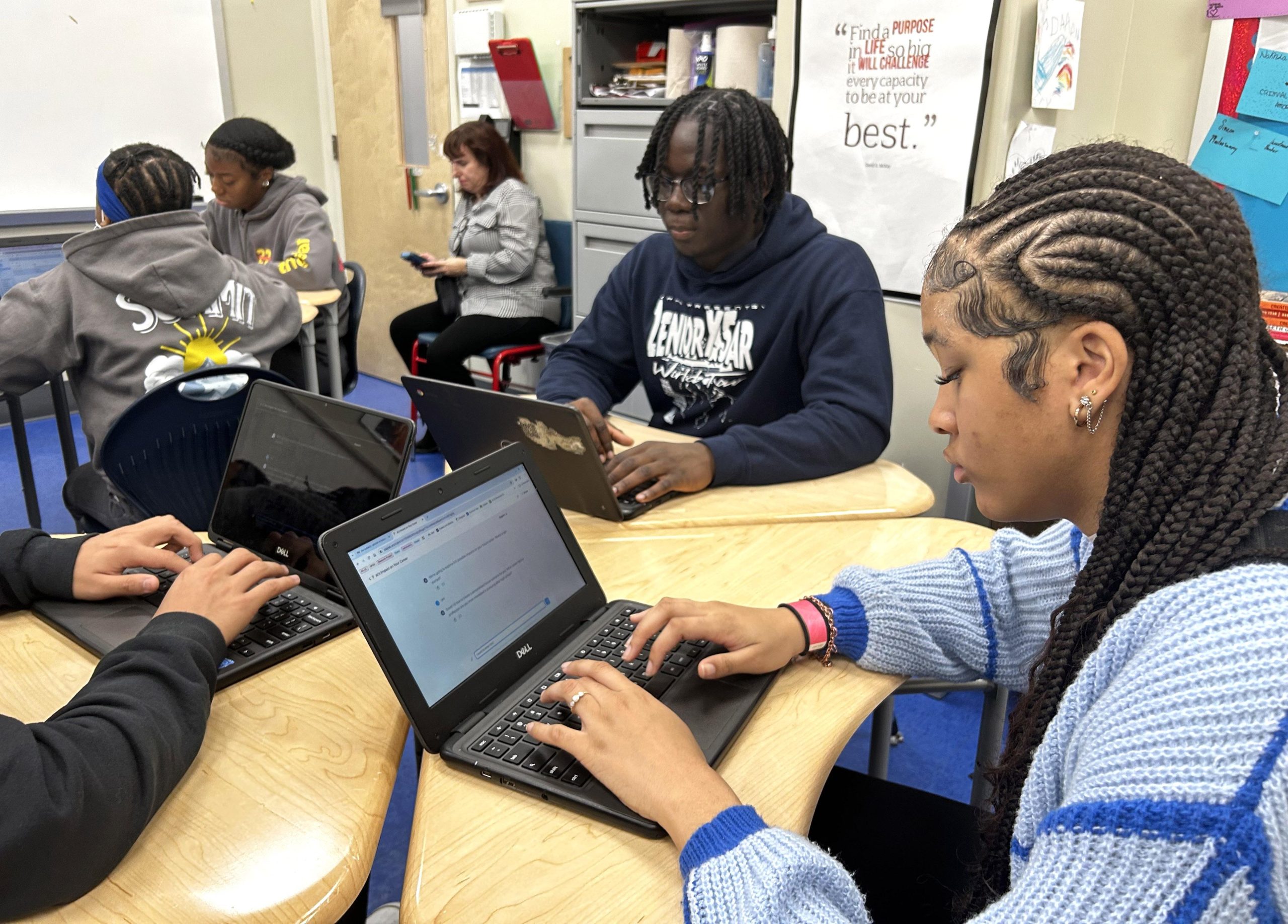
One of the biggest questions for educators is whether today’s students are receiving the skills needed to participate in the growing robotics industry.
Many students graduate from high school without ever building a robot, programming a machine, or exploring how automated systems work.
That needs to change.
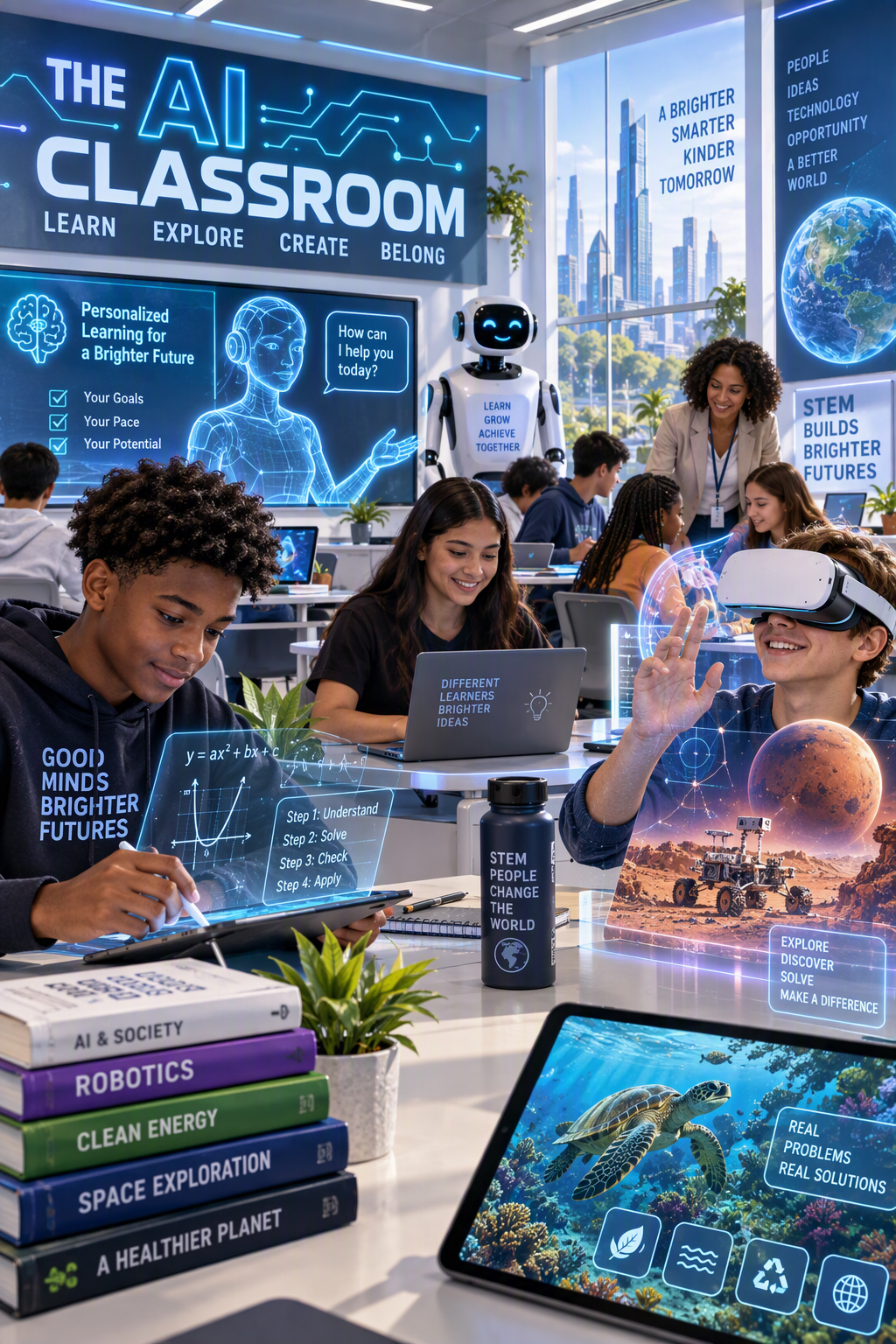
Robotics should become a more visible part of modern STEM education.
Schools do not need expensive humanoid robots to introduce students to robotics.
Affordable robotics kits, microcontrollers, programming platforms, and hands-on engineering projects can provide valuable learning experiences.
Students can begin by building simple machines and gradually progress to more advanced projects.
For example:
Elementary School: Introduce basic robotics through building activities, simple coding exercises, and programmable educational toys.
Middle School: Teach students about sensors, motors, computer programming, and basic engineering principles.
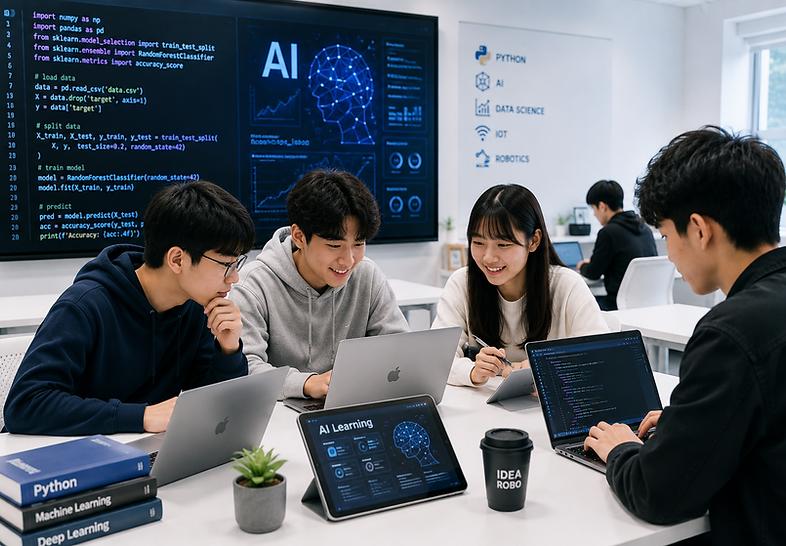
High School: Expand robotics programs through advanced coding, artificial intelligence, mechanical design, electronics, and engineering competitions.
College and Career Training: Provide advanced opportunities in robotics engineering, automation, AI development, mechatronics, and industrial technology.
Schools should also establish partnerships with businesses and universities.
Students need opportunities to see how robotics operates outside the classroom.
A student who builds a simple robot in middle school may eventually become a robotics engineer, manufacturing specialist, or technology entrepreneur.
Exposure creates opportunity.
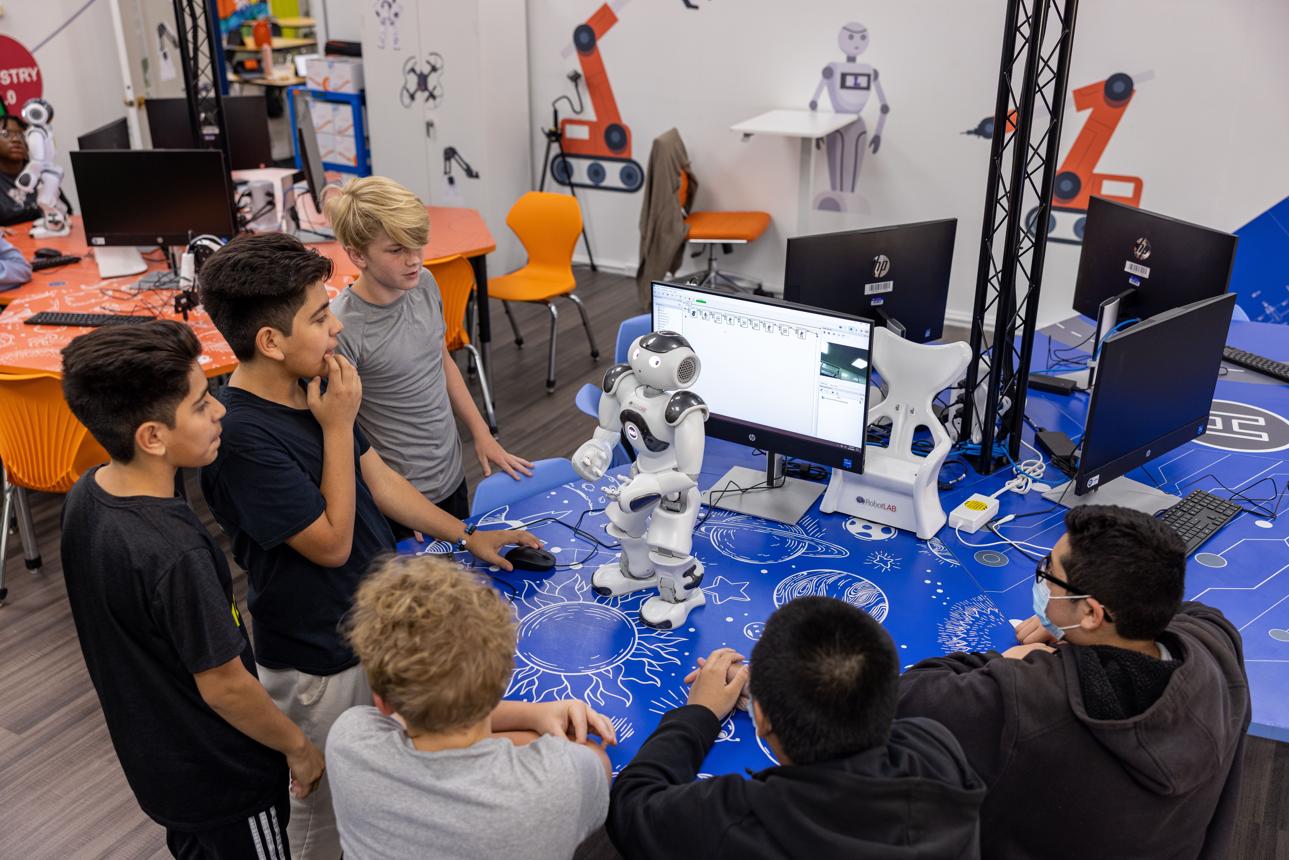
10. The Importance of Robotics Competitions and Innovation Labs
One effective way to encourage students to explore robotics is through competitions and innovation laboratories.
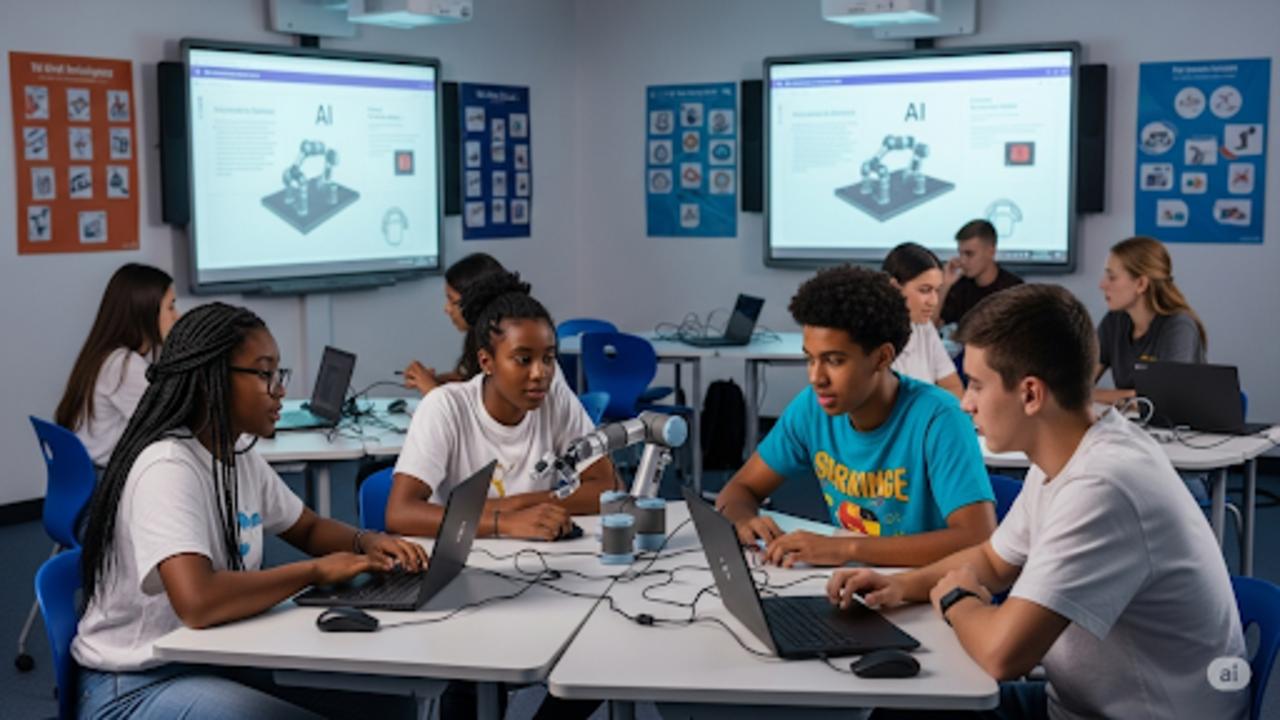
Robotics competitions challenge students to design, build, and program machines to complete specific tasks.
Students must work together, troubleshoot problems, test their designs, and improve their inventions.
These experiences develop technical knowledge as well as teamwork, communication, leadership, and problem-solving skills.
Schools could establish robotics clubs where students meet regularly to develop projects.
Community organizations could sponsor competitions between schools.
Local businesses could provide mentors and equipment.
Universities could host summer robotics programs for middle and high school students.
An innovation laboratory could include:
- Educational robotics kits.
- Computers and programming software.
- 3D printers.
- Electronic components.
- Sensors and motors.
- Microcontrollers.
- Engineering design tools.
- AI learning platforms.
- Safety equipment.
Students could use these resources to create solutions to real-world challenges.
For example, a student team might design a robot that helps clean up plastic waste, delivers supplies in a hospital, or assists individuals with limited mobility.
These projects help students understand that robotics is not simply about building machines.
It is about solving problems that matter.
11. Robots and the Future of Healthcare
Healthcare is one of the industries where robotics could have a particularly meaningful impact.
Hospitals and healthcare facilities face growing demands involving staffing, patient care, supply management, and operational efficiency.
Robotics may help address some of these challenges.
Surgical robotic systems already assist qualified surgeons with certain procedures.
Rehabilitation robots can support physical therapy and movement training.
Autonomous delivery robots can transport medical supplies within some healthcare facilities.
Researchers are also exploring robotic systems that could help people with mobility limitations perform everyday activities.
Imagine an older adult living independently with access to a robotic assistant that can remind them about daily activities, help retrieve certain objects, or connect them with caregivers when assistance is needed.
Such systems could provide useful support.
However, robots should not be viewed as replacements for human compassion and professional healthcare.
Patients need people who can understand their concerns, communicate effectively, and provide emotional support.
The best healthcare applications will likely combine robotic assistance with human expertise.
12. Robots Could Help Protect the Environment
Robotics could also play an important role in environmental protection.
Scientists and engineers are developing robotic technologies that can operate in places that may be difficult or dangerous for humans to access.
In ocean conservation, underwater robots can help researchers explore marine environments, monitor ecosystems, and collect scientific information.
Environmental monitoring robots can help detect pollution and examine conditions in rivers, lakes, and coastal areas.
Agricultural robots may help reduce waste by applying water and other resources more precisely.
Robotic systems can also assist with inspecting renewable energy infrastructure, including wind turbines and solar installations.
Disaster-response robots can enter dangerous environments to help locate hazards, inspect damaged buildings, and support emergency operations.
For organizations dedicated to conservation, robotics offers an exciting opportunity.
Imagine robotic systems assisting researchers with monitoring marine animals, examining underwater habitats, or collecting information about changing ocean conditions.
The technology could help scientists gather information while reducing the need to expose people to dangerous environments.
The future of robotics is not just about making businesses more efficient.
It could also help protect the planet.
13. Will We Eventually Have Robots Working in Our Homes?
The robot revolution will not be limited to businesses and factories.
Robots are already entering homes through robotic vacuum cleaners, lawn-mowing machines, and other automated household devices.
As technology advances, domestic robots may become more capable.
Future household robots could potentially assist with:
- Cleaning and organizing.
- Carrying household items.
- Preparing certain foods.
- Monitoring home security.
- Helping people with disabilities.
- Supporting elderly residents.
- Managing household technology.
However, creating a reliable household robot is much more complicated than creating a machine that performs one specific task.
Homes contain unpredictable environments.
Furniture moves, pets create unexpected obstacles, objects are frequently misplaced, and people change their routines.
A useful household robot must be able to recognize objects, navigate safely, understand instructions, and respond appropriately to unexpected situations.
Cost, reliability, privacy, and safety will also determine how quickly household robotics becomes widespread.
While fully capable household robots are still developing, the direction of the industry is clear: robotics is moving closer to everyday life.
14. What Governments and Businesses Must Do
The robot revolution requires more than technological innovation.
Governments, businesses, educational institutions, and communities must work together to prepare society for the changes ahead.
Businesses should invest in employee training rather than viewing automation only as an opportunity to reduce labor costs.
Workers should have access to retraining programs that help them develop new technical and professional skills.
Governments should consider policies that encourage responsible automation, workforce development, and educational investment.
Schools and colleges should expand access to robotics and engineering programs.
Community organizations should help underserved populations gain access to technology education.
Important priorities include:
- Expanding affordable robotics and computer science education.
- Creating workforce retraining programs.
- Establishing partnerships between schools and employers.
- Supporting small businesses adopting automation.
- Developing workplace robotics safety standards.
- Strengthening cybersecurity protections.
- Encouraging responsible AI and robotics research.
- Creating accessible career pathways for young people and adults.
The goal should be to make technological progress beneficial to society as a whole.
A future where robots increase productivity but leave millions of people without meaningful economic opportunities would represent an incomplete technological revolution.
Progress should improve human lives.
15. The Robot Revolution of 2035: What Might the Workplace Look Like?
Imagine entering a workplace in 2035.
Robotic systems assist with repetitive physical tasks. AI-powered software helps employees organize projects and analyze information. Autonomous machines transport materials throughout buildings. Humanoid robots assist with selected warehouse, maintenance, and service operations.
Human employees supervise systems, solve unexpected problems, communicate with customers, manage projects, and make decisions.
Some employees work as robotics technicians. Others specialize in AI operations, cybersecurity, engineering, or automation management.
Schools and businesses have developed partnerships to help students gain practical experience before entering the workforce.
Employees regularly participate in training because technology continues to evolve.
The workplace has changed, but people remain essential.
This future is not guaranteed, and the pace of development will vary across industries.
Some workplaces will adopt robotics quickly. Others will continue to depend primarily on human employees.
However, one thing is becoming increasingly clear: understanding technology will be an important advantage in tomorrow’s economy.
The students who learn about robotics today may become the people designing, building, operating, and improving the machines of tomorrow.
Conclusion: The Future Workplace Will Need Both Humans and Robots
The robot revolution is changing how we think about work, technology, education, and the future of employment.
Robots are becoming more capable, artificial intelligence is improving their ability to process information, and businesses are exploring new ways to combine automation with human expertise.
Some jobs will change. Some will disappear. New careers will emerge.
But the future should not be viewed simply as a competition between people and machines.
Robots are tools created by human intelligence. Their purpose should be to help people solve problems, improve productivity, increase safety, and create new possibilities.
The real challenge is preparing society for the changes ahead.
Schools must expand robotics and STEM education. Businesses must invest in their employees. Governments must support workforce development. Communities must ensure that technological opportunities are accessible to everyone.
Most importantly, students must understand that they do not have to be afraid of technology.
They can become the people who create it.
The next generation could design robots that assist doctors, protect the environment, improve transportation, help people with disabilities, explore the ocean, and make everyday life better.
The robot revolution is not simply about machines taking over tasks.
It is about discovering what humans and machines can accomplish together.
Tomorrow’s workforce may include human employees, intelligent machines, and robotic assistants working side by side.
The question is no longer whether robots will become part of our workplaces.
The question is: Will we be prepared to work alongside them?
STEM Nastics Magazine: Student Innovation Challenge
The Challenge: Build Your Future Co-Worker!
Imagine you have been hired as a robotics engineer in the year 2035.
Your assignment is to design a robot that helps people at work, school, home, or in the community.
Answer these questions:
- What problem will your robot solve?
- Who will benefit from your invention?
- What tasks will your robot perform?
- Will it use artificial intelligence?
- How will people communicate with it?
- What safety features will it need?
- How will your robot make people’s lives better?
Bonus Challenge: Draw your robot, give it a name, and prepare a five-minute presentation explaining your invention.
Five Discussion Questions
- Will robots eventually replace more human workers, or create more opportunities?
- Should every student learn basic robotics and computer programming?
- What jobs should always require human involvement?
- How could robots help protect the environment?
- Would you feel comfortable working alongside a humanoid robot? Why or why not?
STEM Nastics Editorial Takeaway
Explore. Create. Innovate. Inspire.
The next generation should not simply watch the robot revolution happen. Students should have the opportunity to become the engineers, programmers, scientists, entrepreneurs, and innovators who shape it.
The future is being built today. And tomorrow’s robotics revolution could begin in a classroom.
Suggested SEO title: The Robot Revolution: Will Robots Become Our Future Co-Workers?
SEO description: Discover how robotics and artificial intelligence are transforming workplaces, creating new careers, changing employment, and preparing students for the future of work.
Suggested keywords: Robotics, humanoid robots, future of work, artificial intelligence, STEM education, robot engineering, automation, robotics careers, human-robot collaboration.