12 Ways to Help Rebuild America’s STEM Pipeline
America’s STEM future cannot be left entirely to politicians, school administrators, universities, or technology companies. Parents, students, teachers, business leaders, community organizations, and everyday citizens all have a role to play.
The question is no longer whether we recognize the problem. The question is what we are prepared to do about it.
Here are 12 actions readers can take to help change the direction of STEM education.
1. Parents: Become Your Child’s First STEM Advocate
Parents should ask schools whether children are receiving adequate mathematics, science, computer science, and technology instruction.
Take action:
- Ask about mathematics performance and academic support.
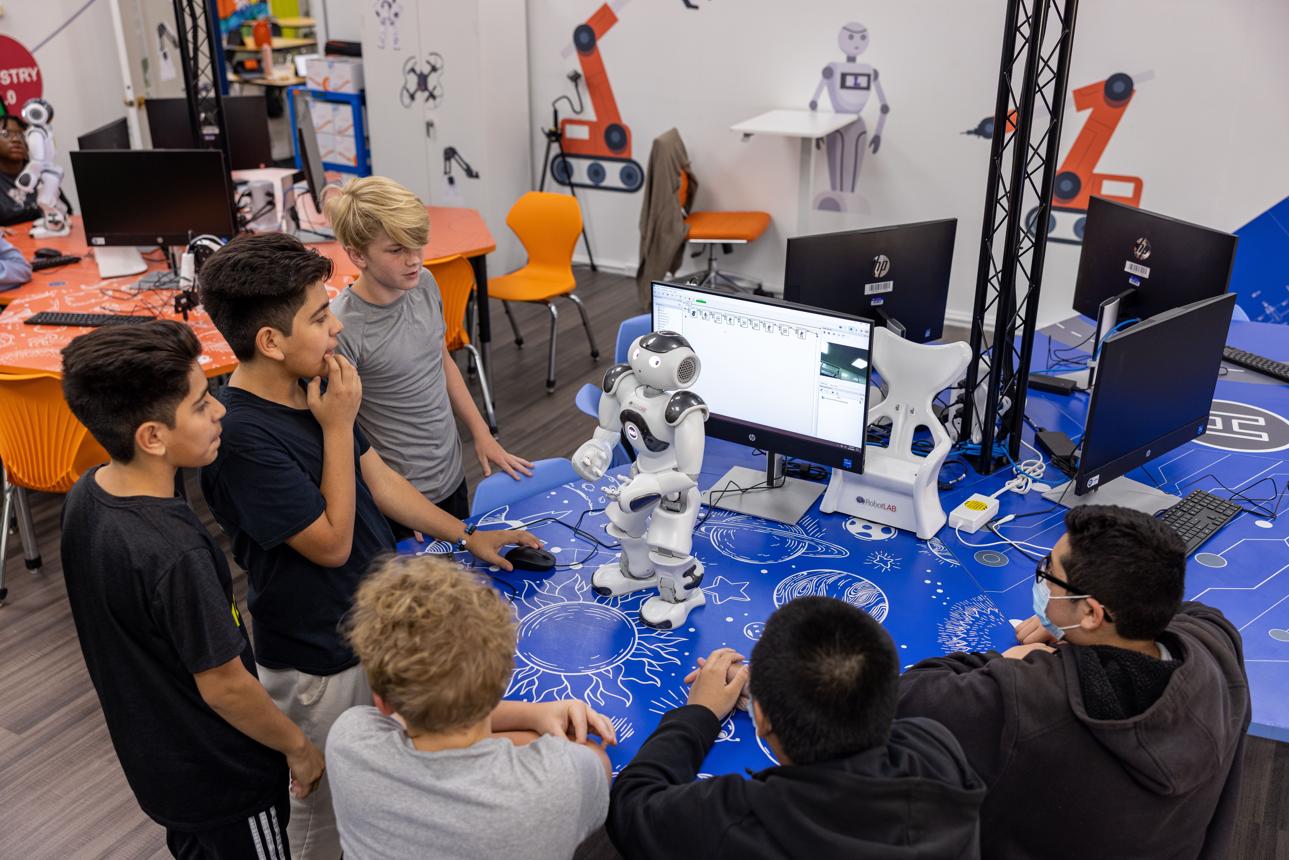
- Encourage participation in robotics, science, and coding activities.
- Explore free educational resources and STEM competitions.
- Ask school administrators about advanced STEM courses.
- Encourage children to explore technology careers.
Parents should not have to wait until high school to discover that their children are academically unprepared for STEM opportunities.
2. Students: Start Building Your Future Today
Students should understand that STEM opportunities are not limited to students with perfect grades or exceptional resources.
Take action:
- Learn basic coding and computer science.
- Participate in science and engineering projects.
- Explore artificial intelligence responsibly.
- Join a robotics or mathematics club.
- Research scholarships, internships, and technical careers.
The goal is to develop curiosity, confidence, and practical skills.
3. Teachers: Bring Real-World STEM Into the Classroom
Teachers can help students understand why mathematics and science matter beyond examinations.
Take action:
- Introduce hands-on learning projects.
- Connect mathematics to technology and engineering.
- Invite STEM professionals into classrooms.
- Participate in professional development.
- Create student innovation challenges.
Students should leave classrooms understanding how their education connects to the world around them.
4. School Leaders: Publish a STEM Improvement Plan
Every school district should have a measurable STEM development strategy.
Take action:
- Review mathematics and science performance.
- Identify gaps in advanced coursework.
- Evaluate teacher staffing and professional development.
- Establish partnerships with colleges and employers.
- Publish annual STEM participation and achievement reports.
Educational leaders should be accountable for expanding opportunities and improving outcomes.
5. Businesses: Adopt a School
Technology companies, hospitals, engineering firms, financial institutions, and manufacturers should establish formal partnerships with local schools.
Take action:
- Adopt a school or school-based STEM program.
- Donate appropriate educational equipment.
- Provide professional mentors.
- Offer supervised internships and career exploration.
- Support scholarships and teacher training.
Businesses should invest in the students who may eventually become their employees, researchers, and innovators.
6. Universities: Open the Doors to Future Innovators
Colleges and universities should make their research capabilities and educational resources more accessible to younger students.
Take action:
- Offer summer STEM academies.
- Organize laboratory visits.
- Establish high school research partnerships.
- Expand dual-enrollment opportunities.
- Develop mentoring and college preparation programs.
Universities should become active participants in developing the next generation of scientists and engineers.
7. Community Organizations: Create Neighborhood STEM Opportunities
Community organizations do not need to wait for government funding to begin exploring partnerships.
Take action:
- Establish after-school technology programs.
- Organize community robotics competitions.
- Provide mathematics tutoring.
- Partner with libraries and recreation centers.
- Develop family AI literacy workshops.
A neighborhood should not have to be wealthy to provide children with opportunities to explore technology.
8. Local Government: Make STEM an Economic Development Priority
Mayors, city councils, school boards, and economic development agencies should recognize that education and economic development are connected.
Take action:
- Establish citywide STEM partnerships.
- Identify unused buildings suitable for educational centers.
- Coordinate workforce development funding.
- Support youth technology entrepreneurship.
- Publish measurable progress reports.
Cities should view STEM education as a long-term investment in economic opportunity.
9. Nonprofit Organizations: Help Close the Opportunity Gap
Nonprofits can help connect students to resources that schools and families may not be able to provide independently.
Take action:
- Develop STEM scholarship programs.
- Create youth technology camps.
- Provide computers and internet access through appropriate programs.
- Establish mentorship networks.
- Apply for educational and workforce development grants.
Nonprofits should also collaborate rather than duplicate existing services.
10. Technology Companies: Make AI Education Accessible
Companies developing artificial intelligence, robotics, and software should participate in preparing the public to understand these technologies.
Take action:
- Support AI literacy programs.
- Provide age-appropriate educational resources.
- Sponsor robotics and coding competitions.
- Offer supervised demonstrations and career talks.
- Support responsible AI education and digital safety.
The next generation should understand how technology works, not simply how to use it.
11. Citizens: Demand Better Educational Opportunities
Education is a community issue. Residents should participate in school board meetings, community discussions, and local planning processes.
Take action:
- Ask elected officials about STEM education priorities.
- Review school district performance reports.
- Support equitable access to advanced coursework.
- Advocate for qualified STEM teachers.
- Encourage businesses to support local schools.
Communities should demand measurable progress rather than settle for announcements about new programs.
12. Readers: Help Launch a STEM Movement
Readers of Stem Nastics Magazine can become part of a broader effort to strengthen STEM education.
Take action:
- Share this article with educators, parents, and business leaders.
- Organize a local STEM education discussion.
- Identify organizations already providing STEM programs.
- Encourage partnerships between schools and businesses.
- Support efforts to establish neighborhood STEM learning centers.
The goal is to turn awareness into organized community action.
THE 90-DAY STEM CHALLENGE
Readers should not wait five years to see whether change is possible. We can begin taking meaningful steps within the next 90 days.
| Timeline | Action | Desired outcome |
| Days 1–30 | Identify local STEM education gaps and existing programs | Understand community needs |
| Days 31–60 | Bring together schools, businesses, parents, and nonprofits | Establish partnerships |
| Days 61–90 | Launch a STEM activity, mentorship program, or educational workshop | Deliver an actual opportunity |
These are proposed milestones, not guaranteed outcomes. Each community should establish its own measurable targets and identify the resources needed to achieve them.
A SPECIAL CALL TO ACTION: BALTIMORE CAN LEAD
Baltimore has the educational institutions, medical research organizations, universities, businesses, and community organizations to develop a stronger STEM ecosystem.
But those resources need to work together.
Imagine a Baltimore STEM Partnership that brings together:
- Baltimore City Public Schools.
- Morgan State University.
- Johns Hopkins University.
- University of Maryland, Baltimore.
- Community College of Baltimore City.
- Local technology and healthcare companies.
- Community organizations and neighborhood leaders.
- Parents, students, and educators.
The partnership could work toward establishing neighborhood STEM centers, expanding AI education, increasing student internships, improving mathematics achievement, and connecting students to college and employment pathways.
The city could begin with a pilot program involving several schools and neighborhood organizations, measure the results, and expand successful initiatives.
This is an opportunity for Baltimore to demonstrate what a coordinated citywide STEM strategy can accomplish.
THE FINAL QUESTION FOR OUR READERS
If we know that mathematics, science, engineering, and technology will influence the future economy, why are we not doing everything possible to prepare our children today?
We cannot continue discussing America’s global competitiveness while ignoring the students who are being left behind.
We cannot expect businesses to find tomorrow’s innovators if they refuse to help develop today’s students.
And we cannot expect communities to prosper if educational opportunities remain disconnected from economic opportunities.
The future of STEM education is not somebody else’s responsibility. It belongs to all of us.
STEM NASTICS MAGAZINE: OUR READER COMMITMENT
We challenge every reader to take one meaningful action:
- A parent: Advocate for stronger STEM opportunities.
- A teacher: Introduce one new hands-on learning experience.
- A business: Mentor or support a student.
- A community leader: Help organize a neighborhood STEM initiative.
- A student: Begin learning a new technology skill.
- An elected official: Support measurable investments in STEM education.
Don’t just read about the STEM opportunity gap. Become part of the solution.
STEM Nastics Magazine — Informing, inspiring, and preparing the next generation of innovators.