How Can America Lead the World in Technology When Students Struggle With Mathematics?
Challenging Minds. Exposing Gaps. Building Tomorrow.
America wants to lead the world in artificial intelligence, robotics, space exploration, cybersecurity, advanced manufacturing, and the next generation of technology. Government leaders talk about competing with China. Technology companies invest billions in innovation. Universities are racing to develop breakthroughs.
But there is a fundamental question America cannot afford to ignore:
How can the United States lead the technology revolution if millions of its students are struggling with mathematics?
Mathematics is more than a school subject. It is the foundation of modern technology. Artificial intelligence depends on mathematical models. Robotics requires geometry, algebra, and physics. Cybersecurity relies on number theory and advanced computing. Engineers use mathematics to design bridges, aircraft, medical equipment, and energy systems.
If America wants to build the future, it must first strengthen the mathematical skills of the people who will create it.
The nation’s technology ambitions may be moving faster than its classrooms.
THE WARNING SIGNS ARE ALREADY HERE
The numbers should concern parents, educators, business leaders, and policymakers.
According to the National Assessment of Educational Progress (NAEP), often called the Nation’s Report Card, only 28% of eighth-grade students scored at or above the NAEP Proficient level in mathematics in 2024. That means most eighth-graders did not reach that assessment’s Proficient benchmark.
Fourth-grade results were somewhat stronger: 39% scored at or above Proficient. However, both grade levels remained below their 2019 pre-pandemic performance levels.
The international picture is also concerning. In the OECD’s 2022 PISA assessment, only 66% of U.S. 15-year-olds reached at least Level 2 mathematics proficiency, compared with 69% across OECD countries.
These assessments measure different things, but together they point to a serious challenge: too many students are not developing the mathematical foundation needed for increasingly technical careers.
This is not a reason to label an entire generation as incapable. It is a reason to examine whether schools are giving students the instruction, support, time, and opportunities they need to succeed.
WHY MATHEMATICS IS THE LANGUAGE OF THE FUTURE
The next economy will reward people who can understand information, recognize patterns, solve problems, and make decisions using data.
Consider five major technology fields:
1. Artificial Intelligence
AI systems use mathematics to identify patterns, calculate probabilities, process information, and improve predictions. Students do not all need to become AI researchers, but understanding statistics, algebra, and data can help them become informed users, developers, and decision-makers.
2. Robotics and Automation
Robots must calculate distance, movement, speed, angles, and position. Engineers use mathematics to help machines interpret their surroundings and perform tasks accurately.
3. Cybersecurity
Protecting digital systems involves mathematical concepts, including logic, probability, and number theory. As cyber threats become more sophisticated, the demand for people with strong technical and analytical skills will continue to matter.
4. Advanced Manufacturing
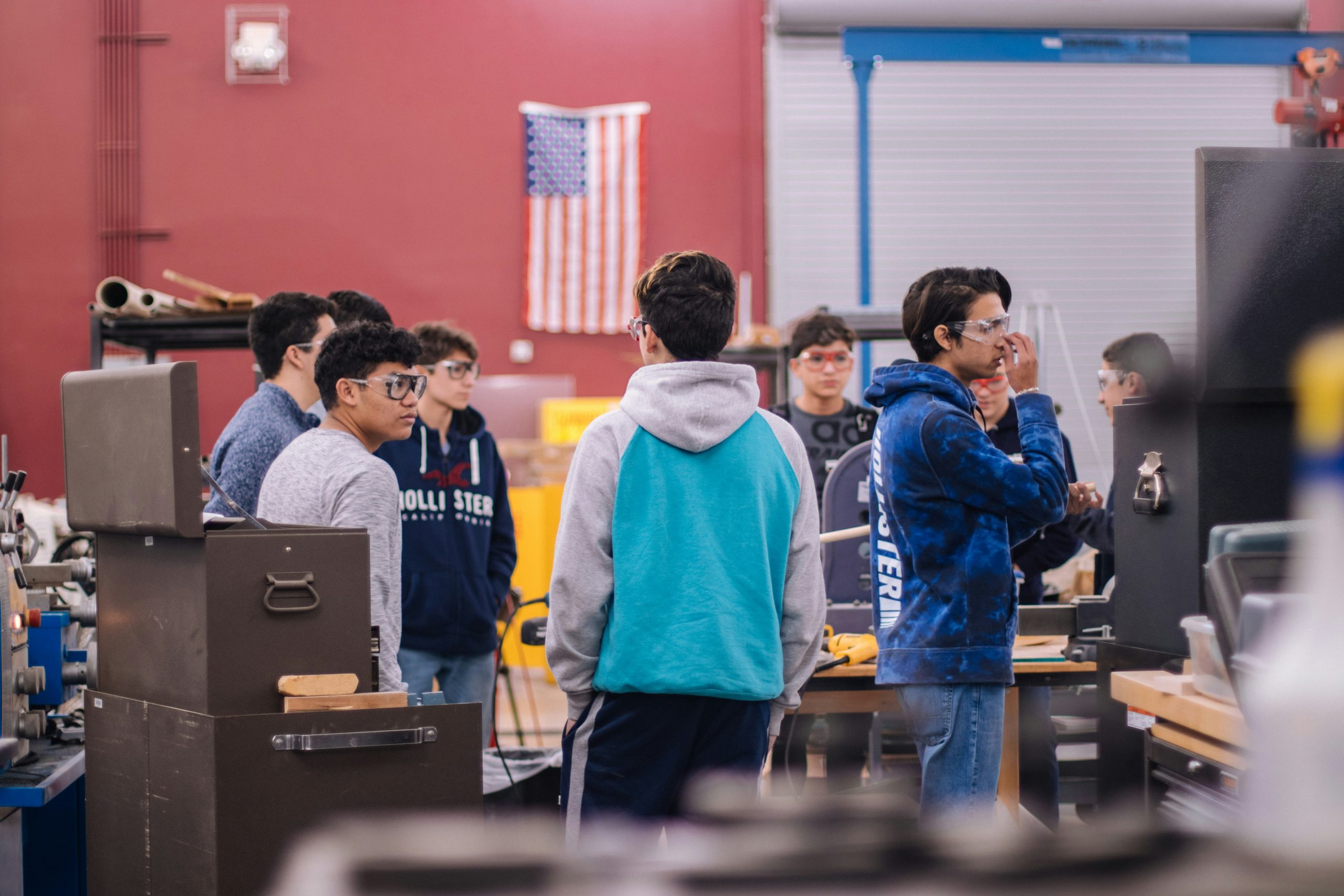
Modern factories increasingly use automated equipment, sensors, computer-controlled systems, and data analysis. Workers need more than the ability to operate a machine. They need to understand measurements, quality control, technical instructions, and problem-solving.
5. Healthcare and Biotechnology
Medical researchers use statistics to evaluate treatments, analyze clinical data, and understand disease patterns. Biotechnology, medical imaging, and pharmaceutical research also depend on mathematics.
The message is clear: mathematics is not only for future mathematicians. It is becoming an essential skill across the economy.
AMERICA’S TECHNOLOGY AMBITION NEEDS A STRONGER EDUCATION FOUNDATION
The United States remains a major center of scientific research, entrepreneurship, and technology development. But leadership cannot be measured only by the success of today’s technology companies.
It must also be measured by the number of young people prepared to become tomorrow’s engineers, researchers, programmers, technicians, and inventors.
The National Science Board’s 2026 report, The State of U.S. Science and Engineering, warns that mathematics performance remains a weakness in the nation’s preparation of future STEM workers. It also notes that high school mathematics achievement is associated with completing STEM degrees.
That connection matters.
Students who struggle with foundational mathematics may have difficulty advancing into algebra, calculus, statistics, physics, engineering, and computer science. Some may decide that STEM careers are not meant for them before they have had a fair opportunity to develop their skills.
America could lose future talent not because students lack potential, but because the education system fails to help them build the foundation.
THE OPPORTUNITY GAP: WHO GETS ACCESS TO STRONG MATH EDUCATION?
The mathematics challenge is also an opportunity challenge.
Students do not all attend schools with the same resources. Some have access to experienced mathematics teachers, advanced courses, tutoring, technology programs, and after-school STEM opportunities. Others face teacher shortages, limited course offerings, overcrowded classrooms, and fewer enrichment programs.
These differences can influence which students are prepared to enter advanced STEM pathways.
The problem is especially important for communities that have historically been underrepresented in science and technology, including many Black, Hispanic, and low-income communities.
America cannot afford to overlook talent because of a student’s ZIP code.
Historically Black colleges and universities (HBCUs) can play an important role in strengthening the national STEM pipeline. Partnerships among HBCUs, public schools, technology companies, and research institutions could create earlier opportunities for students to explore mathematics, engineering, AI, and robotics.
But those opportunities must begin before students reach college. A student who has not received strong preparation in middle and high school may arrive at college needing additional support before entering advanced technical programs.
The solution is not to lower expectations. It is to expand access to the instruction and resources that help students meet high expectations.
THE MATH CLASSROOM MUST CHANGE
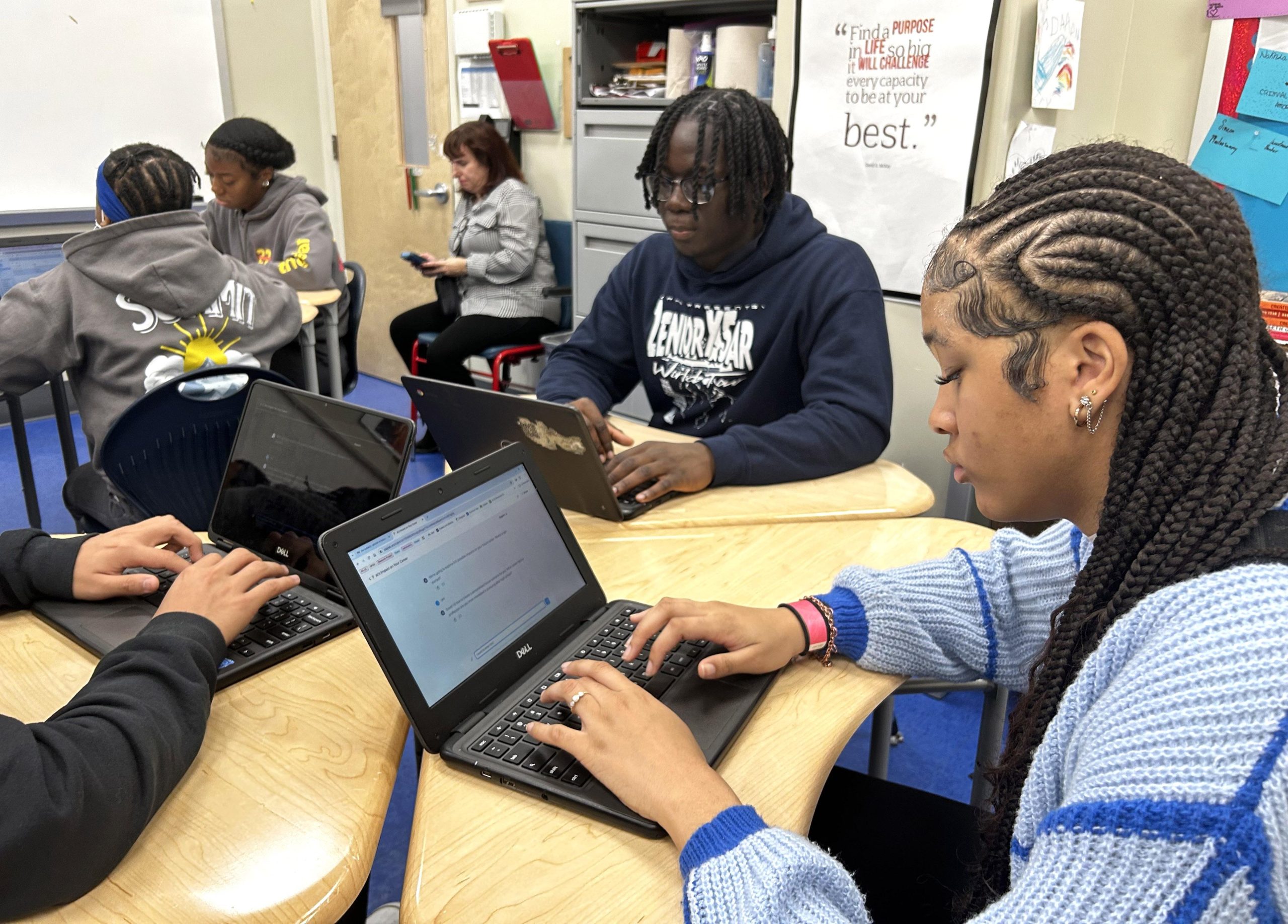
For many students, mathematics feels disconnected from everyday life. They memorize formulas, complete worksheets, and prepare for tests without always understanding how the concepts apply outside school.
That approach needs to improve.
Schools should connect mathematics to real-world challenges:
- AI projects: Use age-appropriate activities to explore patterns, data, probability, and logical reasoning.
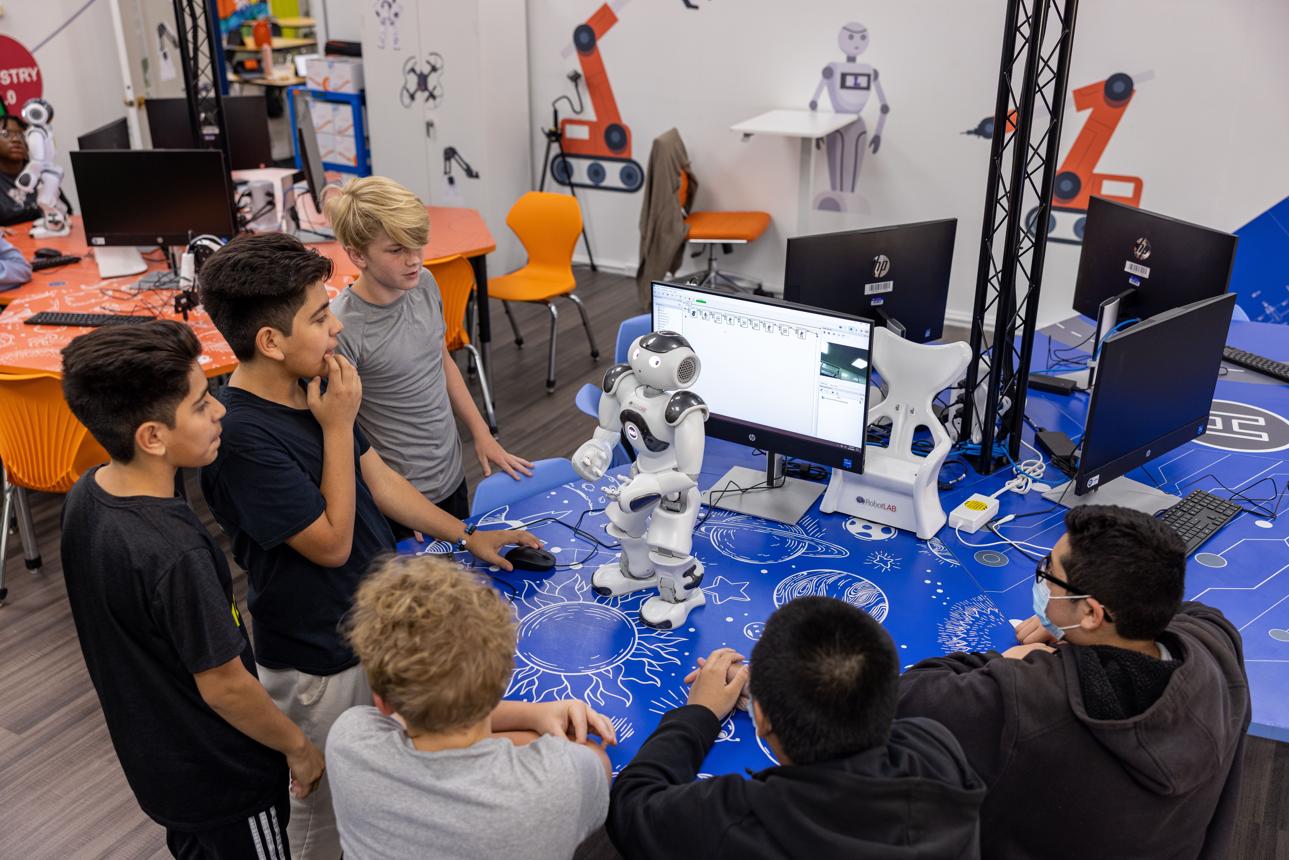
- Robotics: Teach geometry, measurement, ratios, and problem-solving through hands-on design.
- Financial literacy: Apply percentages, interest, budgeting, and statistics to everyday decisions.
- Sports analytics: Explore averages, probability, performance statistics, and data visualization.
- Climate science: Use graphs, measurements, and mathematical models to study environmental changes.
Students should see mathematics as a tool for understanding and changing the world—not simply another requirement to graduate.
Technology can support this transformation. Adaptive learning platforms and AI tutoring tools may help identify gaps and provide additional practice. But technology cannot replace qualified teachers, strong curriculum, meaningful feedback, or human encouragement.
The goal should be to use technology to strengthen teaching, not to replace it.
A NATIONAL MATH AND TECHNOLOGY MISSION
America needs a coordinated effort that treats mathematics education as a foundation of economic competitiveness.
Here are five priorities:
1. Strengthen mathematics in elementary school.
Students need a strong understanding of numbers, fractions, multiplication, division, and problem-solving before they move into more advanced subjects. Early support can prevent learning gaps from becoming larger barriers.
2. Make middle school mathematics a national priority.
Algebra readiness, geometry, statistics, and mathematical reasoning should receive focused attention. Middle school is a critical period for preparing students for high school STEM pathways.
3. Invest in teachers.
Teachers need competitive support, professional development, strong instructional materials, and opportunities to learn how to connect mathematics with modern technology.
4. Build community STEM learning centers.
Libraries, community organizations, universities, museums, and nonprofits can offer tutoring, robotics clubs, coding activities, and family mathematics programs. These opportunities should be affordable and accessible.
5. Connect schools directly to the future workforce.
Technology companies, manufacturers, engineering firms, and colleges should help schools create internships, mentorships, career demonstrations, and practical learning experiences.
WHAT SHOULD AMERICA MEASURE?
A national strategy should not focus only on test scores. It should track whether students are gaining the skills and opportunities needed to move forward.
America should measure:
- Improvement in mathematics achievement from elementary through high school.
- Access to qualified mathematics teachers and tutoring.
- Enrollment and success in algebra, statistics, calculus, and other advanced courses.
- Participation in robotics, engineering, computer science, and AI programs.
- Differences in access and achievement among communities.
- The number of students who successfully move from high school into STEM education and careers.
The country should also publish clear progress reports so parents and communities can see whether investments are making a difference.
THE STEM NASTICS READER ACTION PLAN
This challenge cannot be left to Washington or school districts alone. Families, students, educators, colleges, businesses, and community organizations all have a role.
For parents and families: Ask schools how students are progressing in mathematics. Encourage regular practice, curiosity, and questions. Help children connect mathematics to everyday activities.
For students: Do not assume that struggling with a math concept means you cannot succeed in technology. Ask for help, practice consistently, and explore how mathematics works in robotics, gaming, sports, music technology, and AI.
For educators: Make mathematics relevant. Give students opportunities to solve real problems, explain their reasoning, work together, and learn from mistakes.
For businesses: Invest in mathematics tutoring, teacher development, internships, and STEM partnerships. A stronger future workforce benefits the entire economy.
For policymakers: Make mathematics improvement a measurable education priority. Direct resources toward effective teaching, early intervention, and schools with the greatest needs.
THE FINAL QUESTION: WHO WILL BUILD AMERICA’S FUTURE?
America is competing for leadership in a world increasingly shaped by AI, robotics, automation, biotechnology, and advanced computing.
But the future will not be built by technology companies alone. It will be built by students who learn how to think, calculate, experiment, question, and solve problems.
A nation cannot expect to lead the world in advanced technology while neglecting the mathematical preparation of its next generation.
The United States does not have a shortage of young people with potential. It has a responsibility to make sure that potential is developed.
The math problem is bigger than a report card. It is an economic challenge, an education challenge, and a national competitiveness challenge.
If America wants to lead the world in technology, it must first help its students become stronger in mathematics.
The race for the future does not begin in a Silicon Valley laboratory. It begins in the classroom.
Stem Nastics Magazine | Challenging Minds. Exposing Gaps. Building Tomorrow.